Sustainable herring fishing in the Gulf of Bothnia is strengthened through better knowledge, long-term and ecosystem-based fisheries management, and protection of herring spawning areas
Baltic Sea herring stocks and the herring fisheries have in recent years become a central point of contention in Baltic Sea fisheries policy. Member States’ approaches to the International Council for the Exploration of the Sea (ICES) recommendations for herring quotas have varied, and the public debate around herring is polarised. At the same time, dialogue between groups of fishers and other stakeholders in different countries has been limited, and not all actors have had a clear picture of each other’s perspectives and needs.
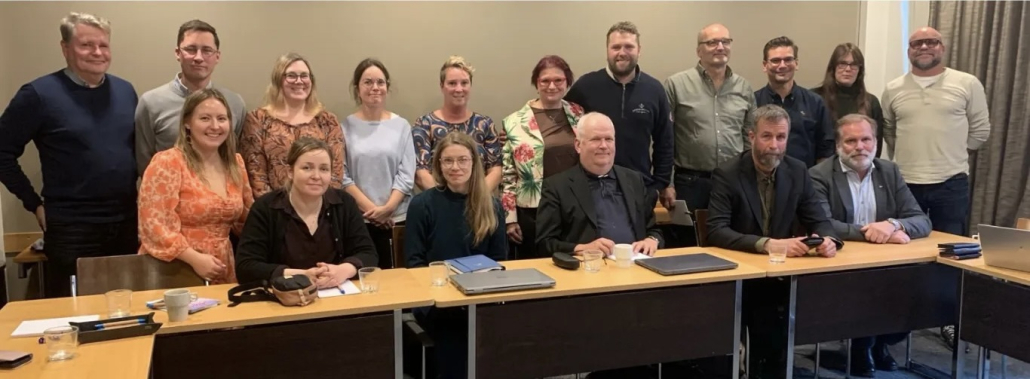
Akordi planned and facilitated a two-day “Fisheries for the Future” workshop on October 8–9, 2025, which brought together Finnish and Swedish fishers, environmental organisations and researchers gathered last autumn to discuss the status of herring stocks and fishing in the Baltic Sea.
The workshop, held in Mariehamn, was a collaborative project between the environmental organization Coalition Clean Baltic (CCB) and WWF Finland, funded by Ålandsbanken’s Baltic Sea Project. Among the represented fishing organisations were Suomen Ammattikalastajaliitto/Finlands Yrkesfiskarförbund (Finnish Professional Fishers’ Association), Österbottens Fiskarförbund (Ostrobothnia Fishers’ Association), Vi Svenska Fiskare (We Swedish Fishers), Kustfiskarna Bottenhavet (Bothnian Sea Coastal Fishers), Ålands fiskare (Åland Fishers) and Sportfiskarna (the Swedish Anglers’ Association). Fisheries management was represented by the Government of Åland and the County Administrative Board of Stockholm. In addition, experts from the Natural Resources Institute Finland, the University of Turku and the Swedish University of Agricultural Sciences participated.
Participants gained a better understanding of differences between countries and areas regarding stock status, fisheries management and research. The organisations that took part in the workshop all agree on the need for joint dialogue and wish for the cooperation to continue.
“The project combines research and practical understanding of the herring situation in the Baltic Sea. That makes the initiative particularly important, as the lessons learned can contribute to better decisions and more accurate measures going forward,” notes Crista Hietala (Head of Marketing and Communications at Ålandsbanken and the Baltic Sea Project) in a joint press release issued by fishing and environmental organizations.
Much of the time was spent breaking down the barriers caused by tensions and mistrust between various groups that had formed earlier, but as we proceeded without rushing, by the end of the second day a window of opportunity opened for drafting a jointly approved and quite comprehensive statement in a good spirit.
“It was wonderful to see and experience the power of coming together and engaging in a facilitated, face-to-face conversation without any rush, in a situation where the participants’ backgrounds, roles, and interests were quite diverse.” – Juha-Pekka Turunen (Senior Mediator at Akordi)
The workshop was also, once again, a good example of the importance of building a shared knowledge base and identifying knowledge gaps in resolving disputes related to the use of natural resources.
Read more:
28.5.2026 Press release (FI/SV/EN):
Key Findings of the Workshop (FI/SV): Summary