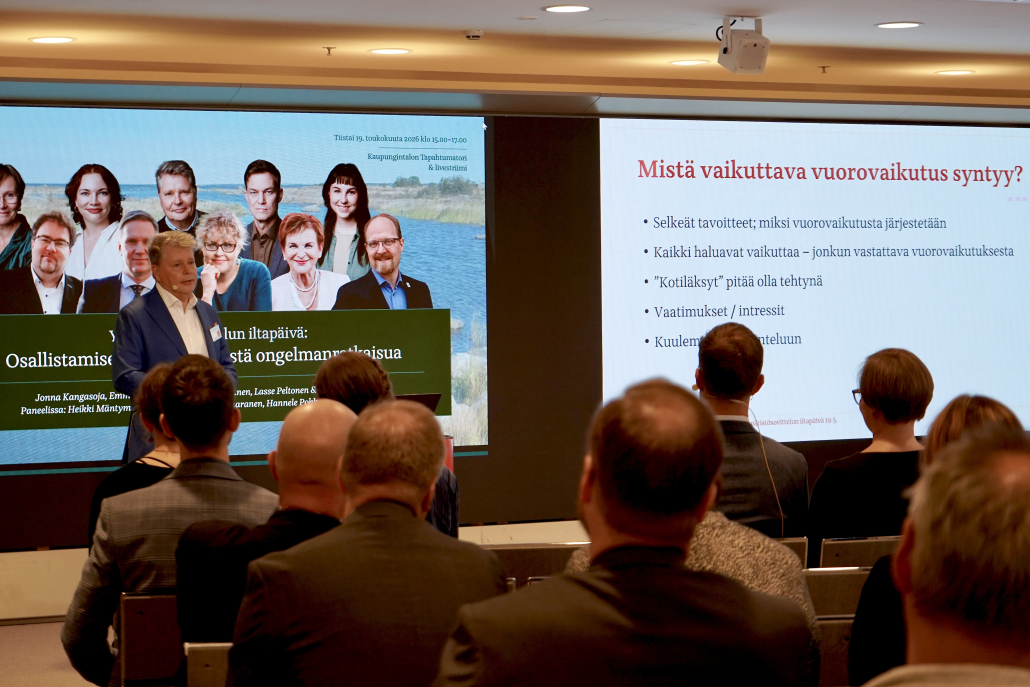
Collaborative problem-solving and effective interaction with the support of an independent party
On Tuesday, May 19, we organized our first Environmental Mediation Afternoon. The event, open to anyone interested, was structured around a topical case study—the resolution of disputes related to the establishment of the nature conservation area of the Kvarken archipelago.
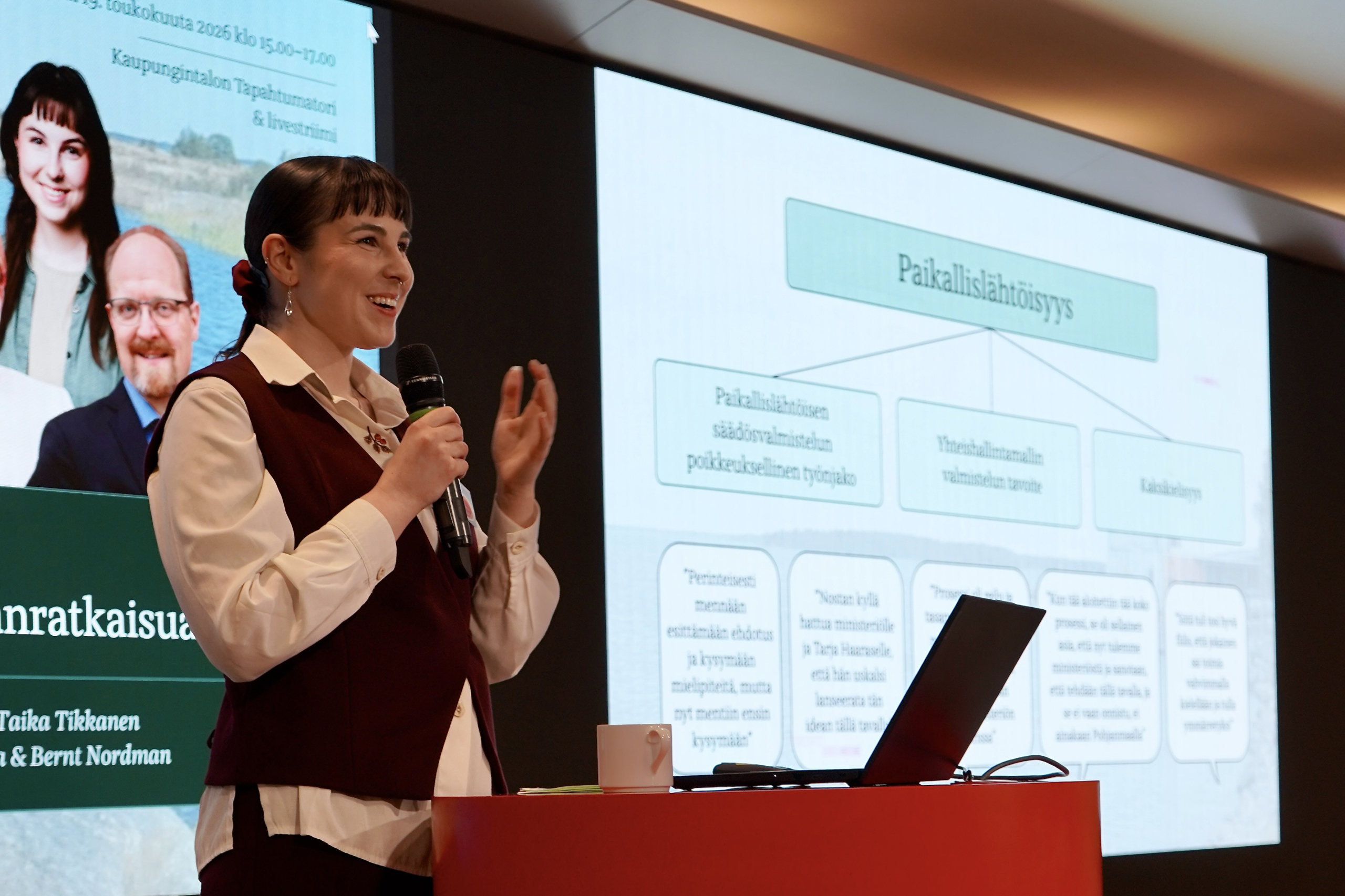
The topic was explored through the personal experiences of those involved in the work, and we also heard about Taika Tikkanen’s master’s thesis, in which she analysed the factors that had a key impact on the process’s success.
Based on the interviews of the case study, the keys to success were:
- Support provided by an independent mediator
- Locally driven procedures and objectives
- Comprehensive representation and equal consideration of different interests
- Trust-building interaction
- A shared practical knowledge base
- Sufficient time
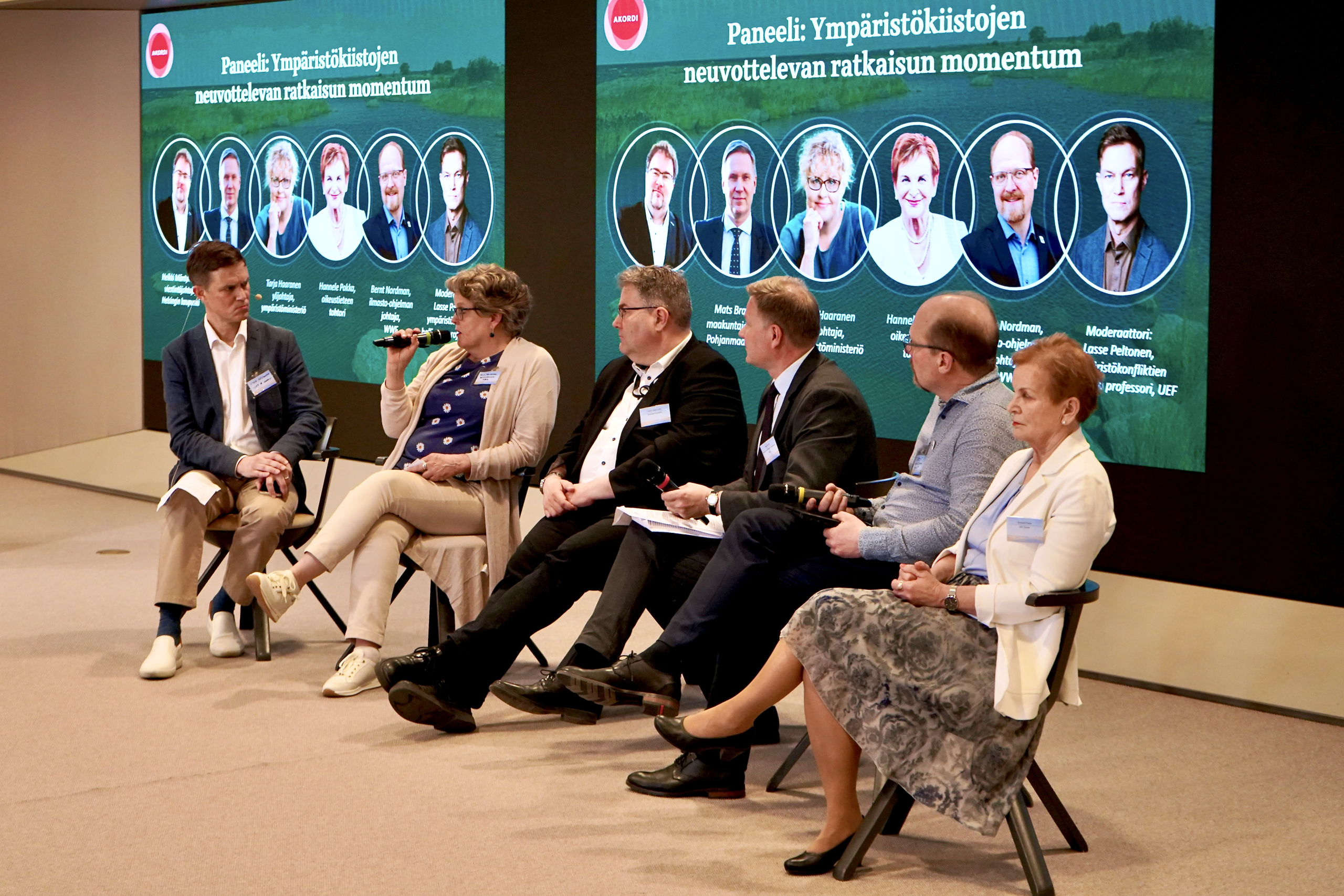
There is a great need and momentum for negotiated solutions to environmental disputes
The panel discussion included Mats Brandt, Regional Director of the Ostrobothnia Regional Council; Tarja Haaranen, Director General of the Department of Water and Natural Environment at the Ministry of the Environment; Heikki Mäntymäki, Director of Communications for the City of Helsinki; Bernt Nordman, Director of the Climate Program at WWF, and Hannele Pokka, Ph.D. in Law. They examined the current state of negotiated resolutions to environmental disputes from their respective perspectives during a discussion moderated by Lasse Peltonen.
There was a consensus among the panelists that conflicts are unlikely to decrease in the future, as projects related to the green transition, for example, lead to clashes between different interests.
“Coordinating green transition projects—particularly with regard to biodiversity—is now a theme that is coming to the forefront and will certainly require new approaches.” – Tarja Haaranen
“Various disputes, discussions, and deliberations related to land use are part of our daily routine.” – Heikki Mäntymäki
“Conflicts exist, and they complicate local decision-making in particular. There will continue to be conflicts as well. That is why expertise like Akordi’s and the methods that have now been developed will be needed.” – Bernt Nordman
The speed of the green transition and the urgency of advancing it pose a challenge for public engagement. The panel emphasized that early engagement is crucial if the transition is to be carried out fairly.
“Yes, the transition must be carried out as fairly, honestly, and transparently as possible, no matter how urgent the situation is or how important the public interest may be.” – Hannele Pokka
The discussion also addressed which issues are non-negotiable, as well as how to give voice to the perspectives of those who cannot speak for themselves—including the needs of nature and future generations. The risks of negotiated conflict resolution were examined, among other things, from the perspective of knowledge production.
“From the perspective of environmental organizations, there are certain issues that should not be negotiated: scientific facts. [-] The risk is that such processes can introduce inaccurate information into the process, which then persists and gains legitimacy.” – Bernt Nordman
It was noted that it would be particularly important to identify situations in which collaborative problem-solving methods and support from an independent party are needed to supplement statutory procedures.
“We have very strong environmental legislation and good administrative procedures, but there are clearly identifiable cases where these do not lead to a solution that everyone can accept.” – Tarja Haaranen
“Kvarken is a good example of how these participatory methods can resolve long-standing disputes and rebuild trust. [-] I would consider this a unique opportunity. These experiences must not end here—nor should they remain an exception.” – Mats Brandt
The panelists discussed what kind of support these processes would need in Finland to capitalize on the momentum. Key factors that emerged included sharing lessons learned and knowledge from these cases, developing expertise, and scaling up activities from pilot projects into established practices wherever the model would be beneficial and needed.
“If we could identify the most challenging issues, determine where we can really focus our efforts, and address them at an early stage, we would ultimately save time and might even be able to avoid the conflict entirely if we had that discussion early enough.” – Tarja Haaranen
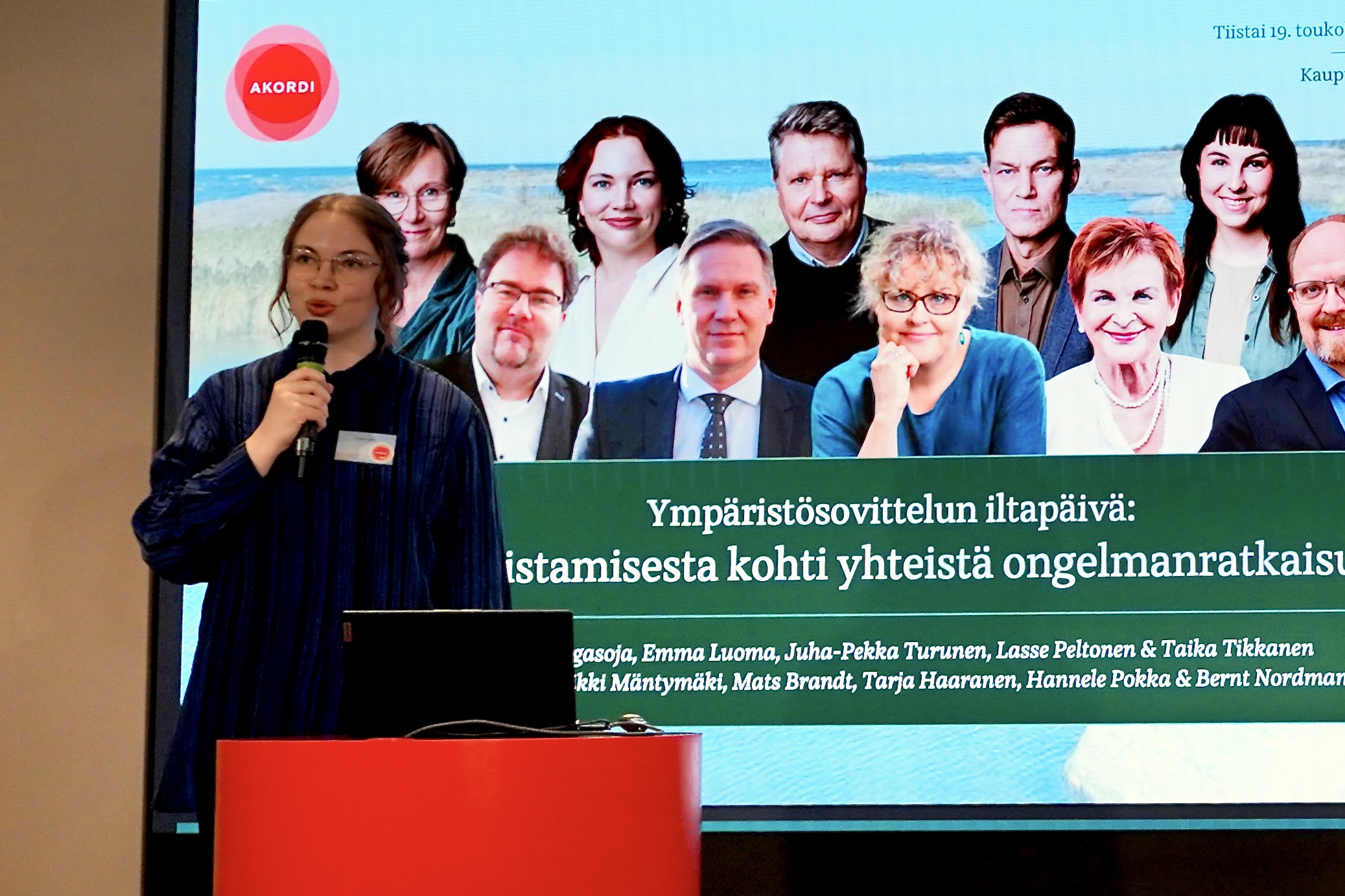
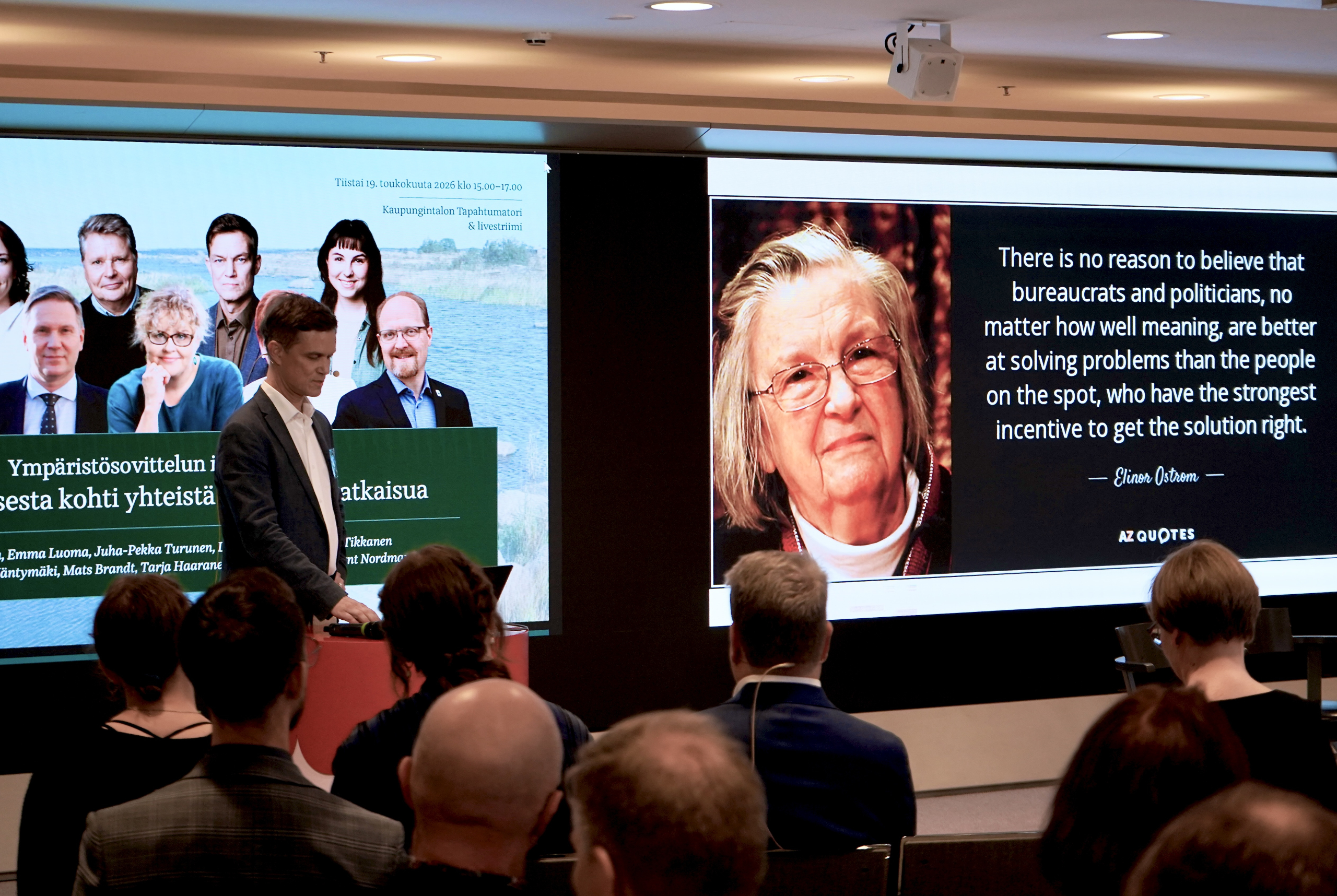
The operating model of a neutral party is unique
Emma Luoma explained what the role of an independent party entails and how negotiated solutions to environmental disputes have evolved in Finland over the past 30 years. The presentation was based on Luoma’s doctoral dissertation, which examines collaboration processes supported by Akordi in various contexts of environmental and natural resource management.
The presentation emphasized that fulfilling this role requires professional expertise and a wide range of skills. These include, among other things:
- Planning and facilitating processes
- Planning and implementing tailored interventions
- Ensuring the conditions for collaboration
- Mediating disputes and tensions
- Developing and maintaining new collaborative structures and forms
Recognition for a Unique Expert
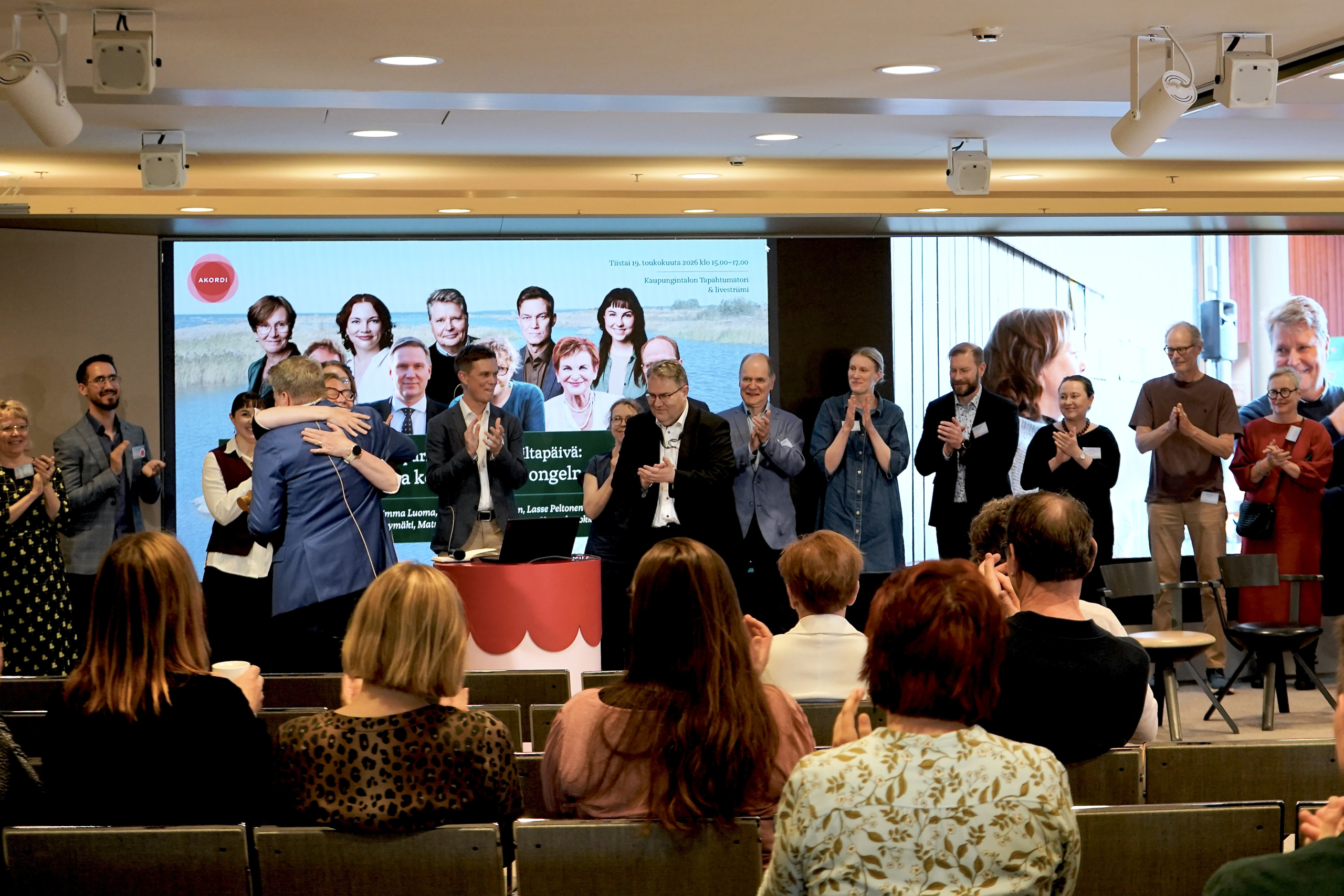
Akordi’s Senior Mediator Juha-Pekka Turunen received the Lifetime Achievement Award in Environmental Mediation at the event in honor of his distinguished 30-year career. The stage was filled with colleagues who had worked with him over the years.
JP shared his insights on building effective interactions, emphasizing, among other things, the importance of clarifying the goals of the interaction, dividing responsibilities, preparation, listening, and trust. You can hear all of this veteran’s insights, as well as the other discussions from the day, by watching the recording of the event (in Finnish):
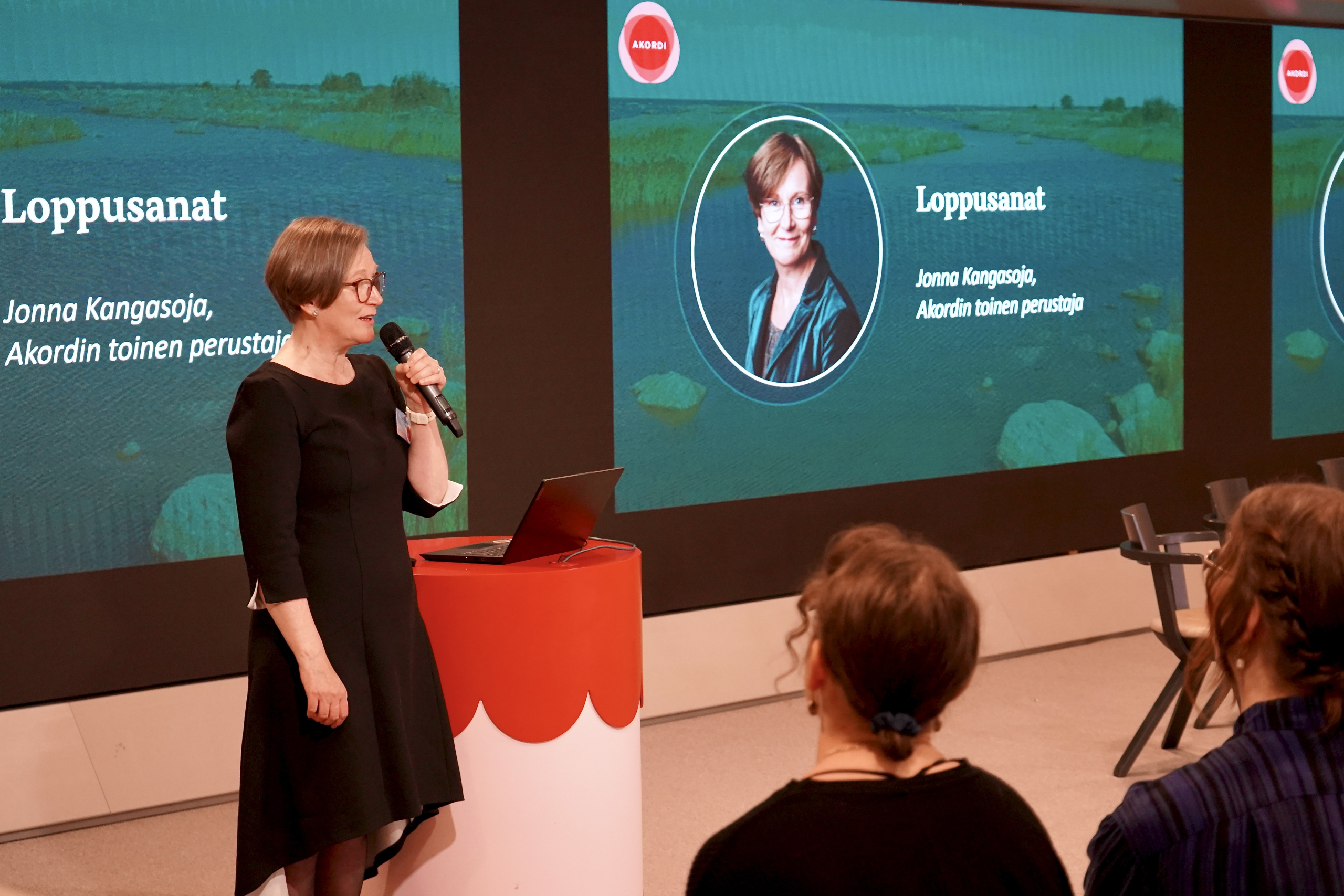
A big thank you to everyone who participated in the first Environmental Mediation afternoon!