Tag Archive for: skaalaushanke

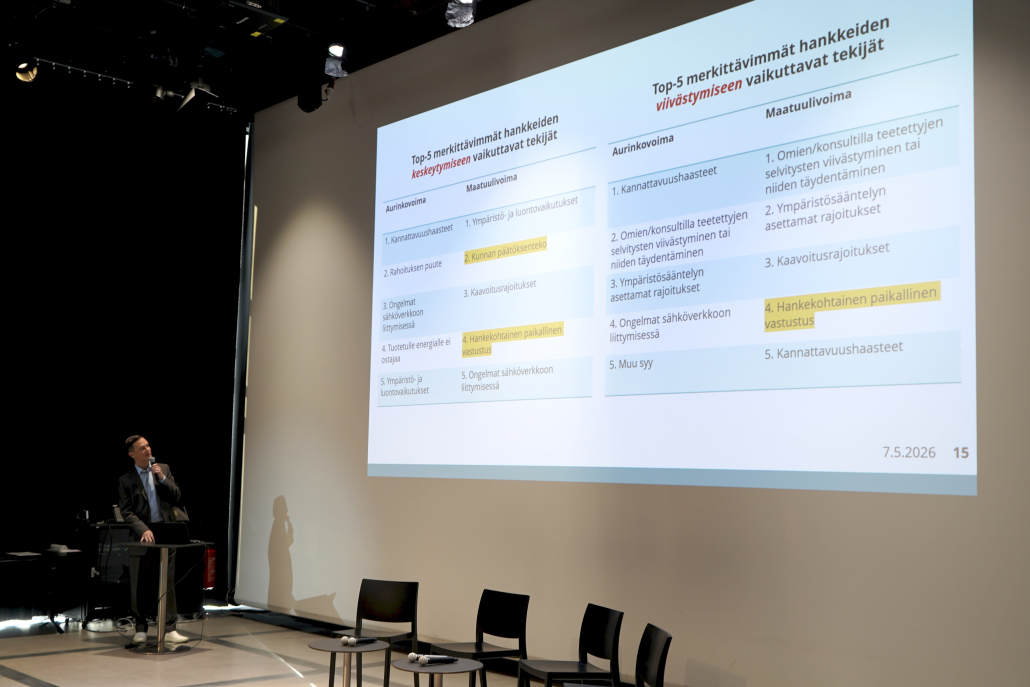
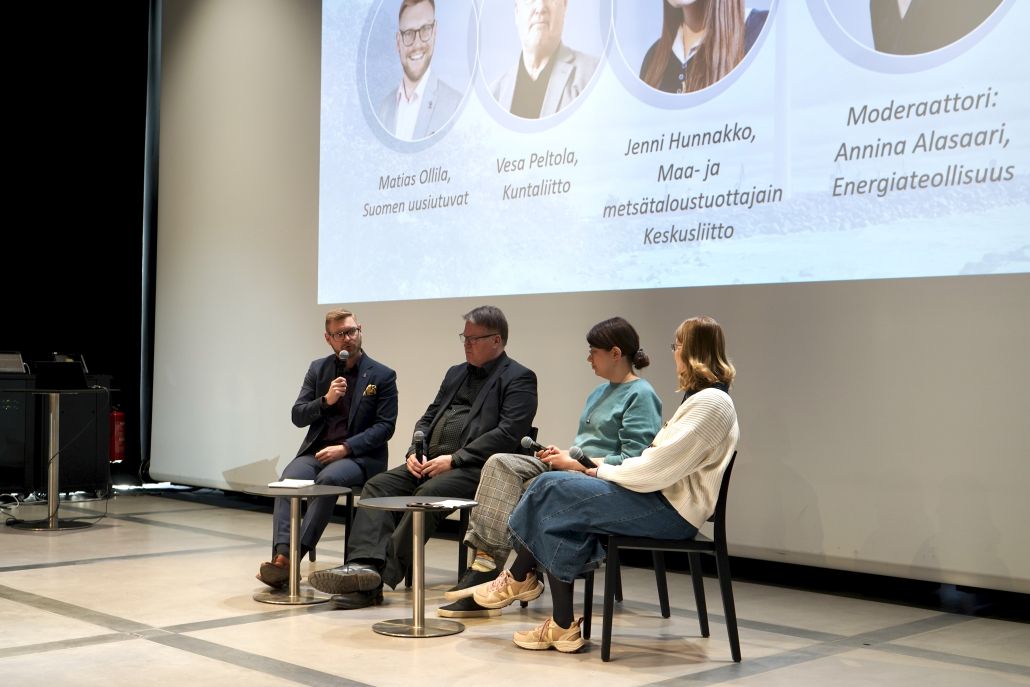
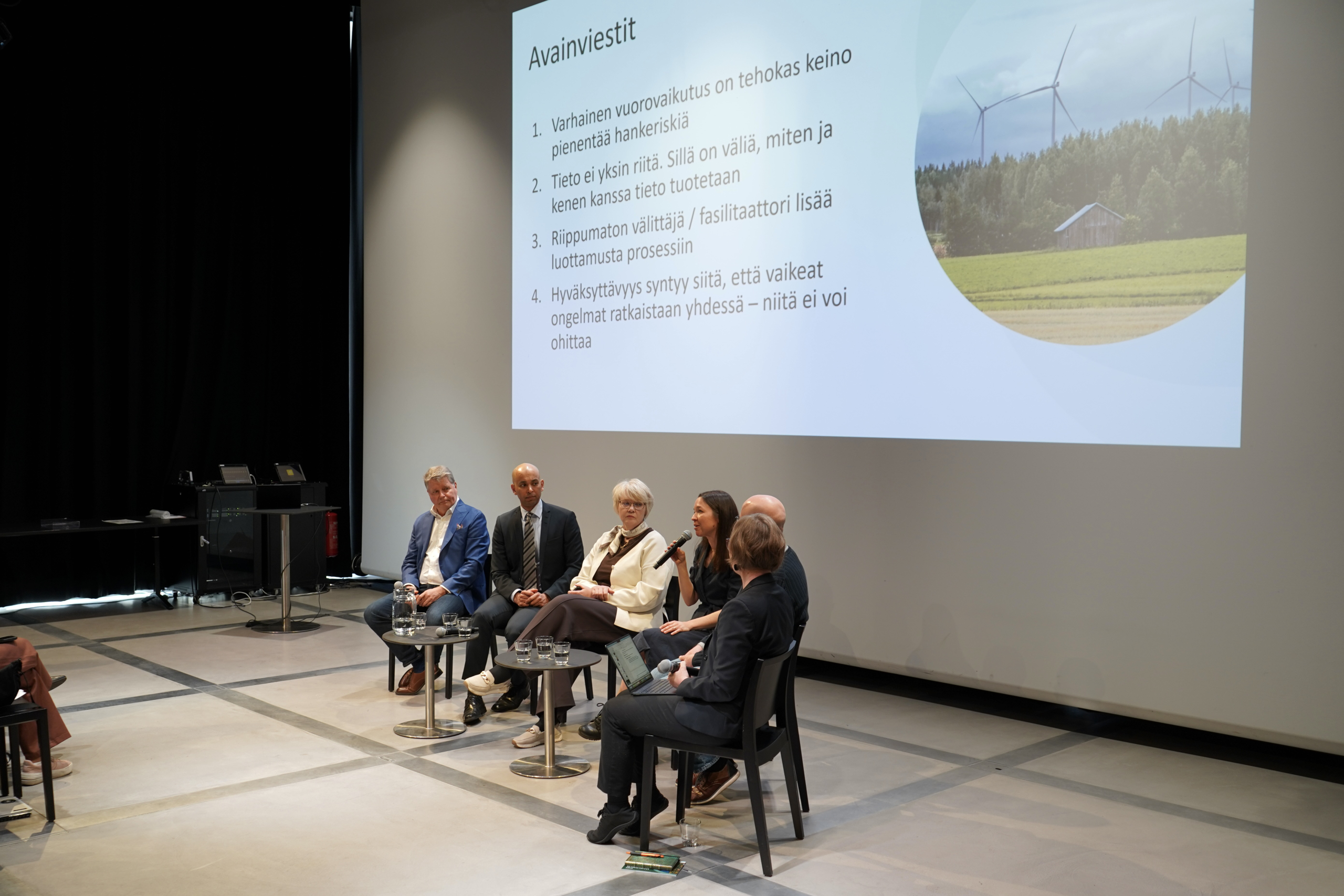
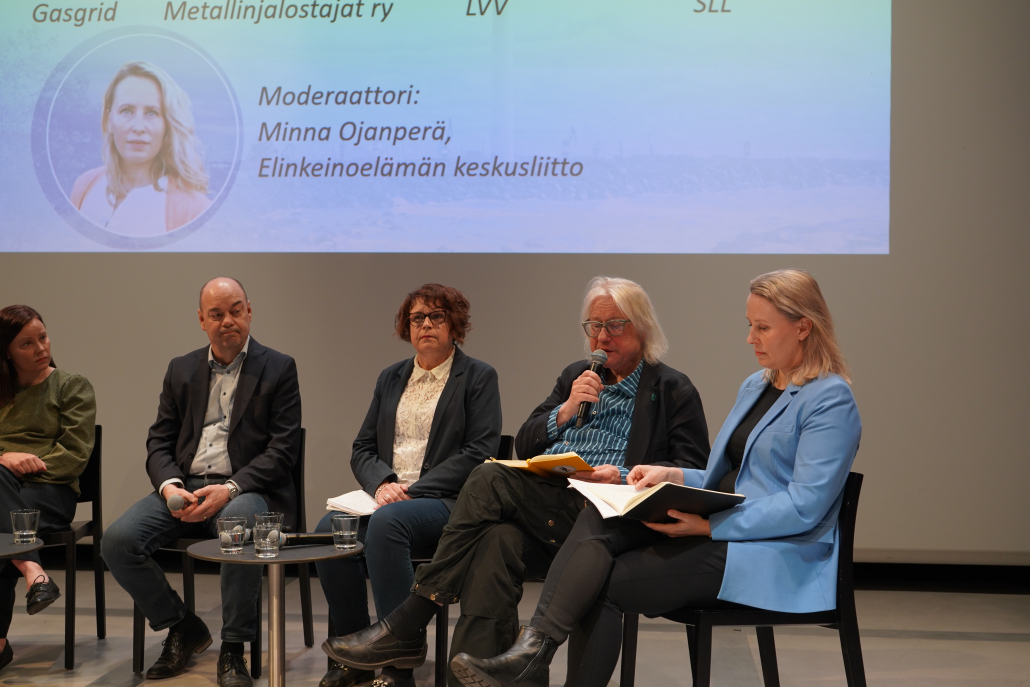
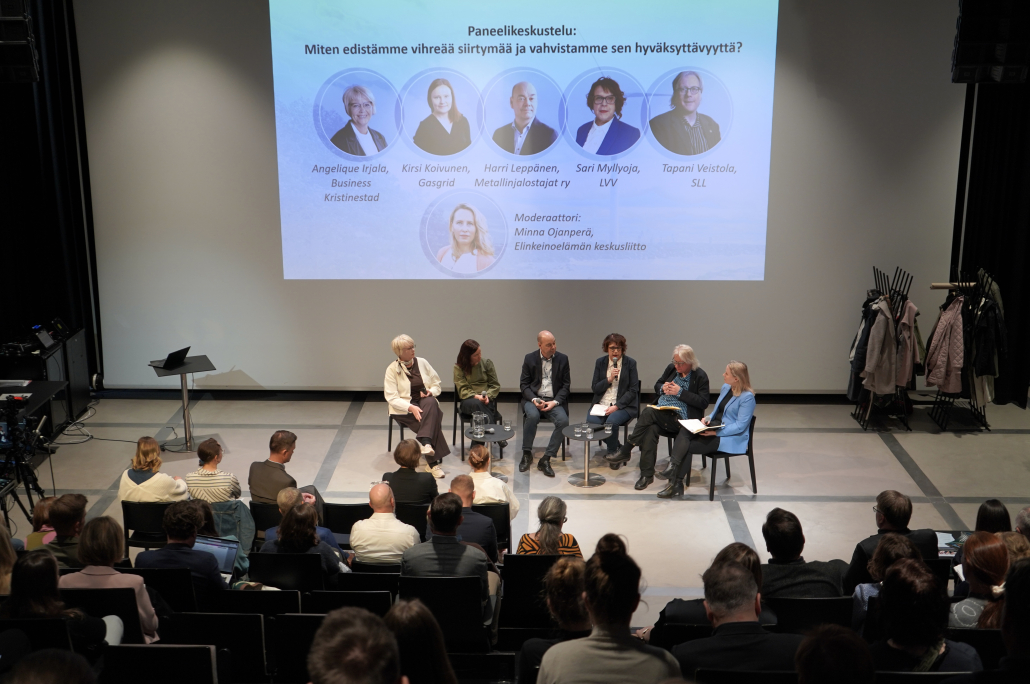
Seminar on the Acceptability of Green Transition Investments, May 7

Welcome to the seminar on current topics in the green transition!

Date: May 7, 2026

Time: 9:00 a.m.–12:00 p.m. (morning coffee starting at 8:30 a.m.)

Location: Maija Hall, Oodi (Töölönlahdenkatu 4, 00100 Helsinki) + livestream

Language: Finnish

We will present the latest research findings on the factors influencing the acceptability of energy projects, associated risks, and future prospects, based on the results of a nationwide survey of wind and solar power operators.

Following the presentation of the research findings, we will move on to practical examples. Project operators will share their experiences on how early-stage engagement has been strengthened and what lessons can be shared from these experiences:

1) The arrival of the hydrogen plant project in Kristiinankaupunki – a place for negotiation

2) Implementing community engagement for small-scale nuclear power in Helsinki in accordance with all the rules of the art

3) Aligning the EIA program to strengthen the acceptability of a solar power project in Loviisa

The lineup includes a wide range of experts:

  • Annina Alasaari, Finnish Energy
  • Thomas Banafa, Akordi
  • Outi Haanperä, Sitra
  • Aleksi Haverinen, Plugpower
  • Jenni Hunnakko, The Central Union of Agricultural Producers and Forest Owners (MTK)
  • Angelique Irjala, Business Kristinestad
  • Jonna Kangasoja, Akordi
  • Kirsi Koivunen, Gasgrid
  • Melina Laine, Helen
  • Harri Leppänen, Finnish Steel and Metal Producers
  • Sari Myllyoja, Finnish Supervisory Agency
  • Minna Ojanperä, Confederation of Finnish Industries
  • Matias Ollila, Renewables Finland
  • Vesa Peltola, Association of Finnish Cities and Municipalities
  • Lasse Peltonen, University of Eastern Finland
  • Janne Ristolainen, Fortum
  • Juha-Pekka Turunen, Akordi
  • Tapani Veistola, The Finnish Association for Nature Conservation

The full program and registration can be found here! Please note that there are a limited number of seats available for on-site participants.

The event is organized by: Akordi, Confederation of Finnish Industries, Finnish Energy, University of Eastern Finland, Association of Finnish Cities and Municipalities, Sitra, and Renewables Finland

Our work is supported by the TAH and RELEX Foundations.

Starting points for implementing an acceptable and just green transition – Akordi’s proposal for an engagement strategy for the City of Oulu

We have been sparring with the City of Oulu (Urban Environment Services & BusinessOulu) during the fall of 2025 and spring of 2026 as part of the Scaling up the work in anticipating and resolving conflicts in the green transition initiative, supported by the TAH and RELEX Foundations.

As a result of this collaboration, we developed a practical and systematic engagement strategy for the city that supports the implementation of a just, predictable, and widely accepted green transition. The strategy brings together principles and methods that Oulu can use to strengthen citizen participation and its collaboration with stakeholders. The model is based on Akordi’s long practical experience and international examples.

The engagement strategy includes for example:

  • How do the key principles of anticipating and resolving land use conflicts—acknowledgement, agency, reciprocity, and clarity—manifest themselves when applied to the situation in Oulu?
  • How do the need for early and recurring interaction, the coordination of interfaces between projects, and the alignment of schedules materialize, particularly in the Hangaskangas, Oritkari and Vihreäsaari, Pyyryväinen, and Laanila areas?
  • How was systematic analysis—which also takes into account power relations and levels of trust among the parties—utilized in identifying stakeholders, their concerns, and methods of participation?
  • What kinds of concerns emerged regarding safety, environmental impacts, changes to the living environment, the distribution of benefits and drawbacks, past experiences and perceived mistrust, as well as the availability and transparency of information?
  • What frameworks were established for gathering and compiling information, conducting consultations, compiling advice and recommendations, and for joint decision-making and implementation?
  • How should resourcing and coordination be structured as a cross-administrative framework so that the city can provide consistent, effective, and trust-building engagement in all green transition projects?
  • What was recommended for planning engagement activities at different stages of projects?

High-quality engagement is not rocket science, but it requires carefully planned and implemented processes where challenges are solved together while acknowledging different perspectives and starting points. Well-resourced, high-quality, and timely engagement prevents conflicts, reduces complaints, and ultimately improves the quality of planning and the feasibility of projects. Acceptance is earned through well-executed and fair processes.

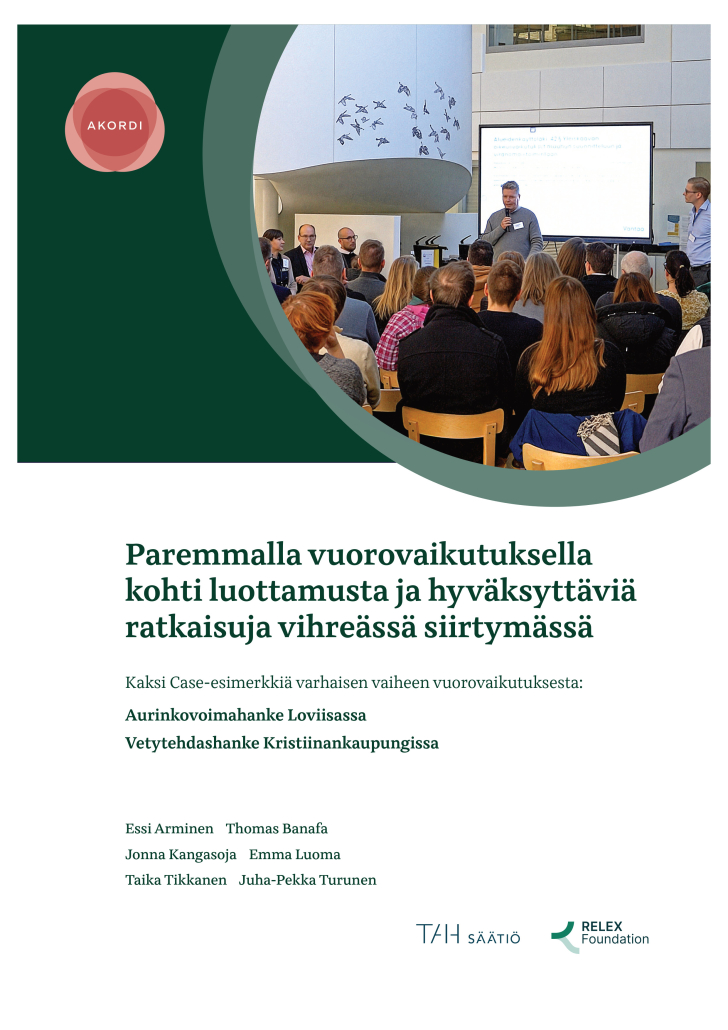
Read the publication in Finnish: Banafa, T., Turunen, J-P., Kangasoja, J. & Arminen, E. (2026). Lähtökohtia hyväksyttävän ja oikeudenmukaisen vihreän siirtymän toteutukseen. Akordin ehdotus vuorovaikutusstrategiaksi Oulun kaupungille [Starting Points for Implementing an Acceptable and Just Green Transition. Akordi’s Proposal for an Interaction Strategy for the City of Oulu]

Wind power operators and reindeer herding district working with maps – Uusiutuvat magazine highlights the more targeted collaboration

Since 2019, stakeholders in the reindeer herding and wind power sectors have been learning from one another, building collaboration, and defining best practices for coordinating reindeer herding and wind power projects hosted by Akordi, the Reindeer Herders’ Association, and Renewables Finland.

Over the past year, this joint effort has evolved into a more targeted model, with all parties satisfied with the results. Discussions have focused particularly on the cumulative impacts of various projects.

The joint meeting in January between the Western reindeer herding district and wind power operators active in the area was the first time that project developers operating in the same area came together to meet with the reindeer herding cooperatives. Discussions continued in two additional meetings involving the Palojärvi and Lohijärvi reindeer herding cooperatives, which face the greatest project pressure.

It was precisely this reindeer herding district-level approach that was found to be useful in terms of cumulative impacts, and the model is recommended for other regions as well.

“It has been helpful and nice to see that as people have gotten to know each other, it has naturally made working together easier. There is now mutual understanding on both sides. It’s definitely worth refining the concept in other regions. It’s also been fun in a way—we’ve taken big steps in a positive sense. If a new project or something like that comes up, it’ll be much easier for both sides to get started,” says Tapio Vuolo, reindeer herder for the Palojärvi reindeer herding cooperative.

Read more in the article by Jonna Kangasoja and Emma Luoma: Uusiutuvat magazine 1/2026

Read more about building a long-term cooperation forum in the project description: Building a Collaborative Platform for Reindeer Husbandry and Wind Power

Finnish forest reindeer and wind power development on a collision course: Situation overview and paths to resolving tensions in Central Ostrobothnia

Akordi’s new publication examines the rapidly developing situation in Central Ostrobothnia in the context of wind power and Finnish forest reindeer from different perspectives and proposes initial steps to resolve tensions. The case is important because it reflects the broader friction associated with the green transition; the challenges are not limited to Finnish forest reindeer and wind power.

For the publication, Akordi conducted confidential interviews and held discussions with various stakeholder groups in the Kaustinen region at the end of 2025. The build-up of tensions is described from the perspectives of municipal and wind power actors, environmental authorities, researchers, and regional conservationists.

The forms and quality of current interaction, mainly within the framework of the EIA process, are reflected in the fact that all parties shared the experience that others do not properly understand their starting points, responsibilities, or concerns. However, all the stakeholder groups interviewed had a clear desire to move forward constructively, as the current situation is perceived as emotionally draining and not serving anyone’s long-term interests.

The publication proposes further steps to resolve the identified challenges and tensions, which would enable more considered progress between the various actors through collaborative management and facilitated dialogue. The aim is to address uncertainties and conflicts proactively, before they escalate into legal disputes, and to build trust and create a shared understanding and acceptable practices through negotiation.

Summary:

  • The rapid growth of wind power has brought green energy and investment to several municipalities in Central Ostrobothnia, but its combined effects pose a risk to the region’s Finnish forest reindeer population.
  • The new Natura protection zones for forest reindeer defined by the authorities have frozen local wind power development.
  • Municipal and project developers have questioned the authorities’ interpretation and the studies behind it; the protection zones have been perceived as an overreaction.
  • The rapidly escalating situation has led to harsh rhetoric, growing mistrust, and legal action, the consequences of which serve no one’s interests.
  • A faster and more sustainable solution than legal action would be to proceed through collaborative management and facilitated dialogue, which would enable more considered progress between the various actors.

The publication is based on a project funded by the TAH Foundation and the RELEX Foundation and implemented by Akordi, which aims to roll out, scale up, and establish new collaborative operating models for addressing conflicts related to the green transition.

Read more (in Finnish):

Publication: Kotilainen, J. & Banafa, T. (2026). Metsäpeura ja tuulivoimakehitys törmäyskurssilla: Tilannekuvaus ja polkuja jännitteiden ratkaisemiseksi Keski-Pohjanmaalla. Akordi Oy publications.

Press release: STT Info / Metsäpeura ja tuulivoimakehitys törmäyskurssilla: Tilannekuvaus ja polkuja jännitteiden ratkaisemiseksi Keski-Pohjanmaalla

Yle news 12.3.2026: Metsäpeura ja tuulivoima törmäys­kurssilla Pohjanmaalla – kunta­päättäjien luottamus viran­omaisiin ja tutkijoihin rapisee


Experts from Akordi and WesselinkVanZijst presented systematic and proven practices for engaging the general public and key stakeholders in large-scale energy projects

In yesterday’s webinar, DENSE & TENSE: Large Scale Energy Projects in Oulu and The Hague – Systematic Approach to Engaging the General Public and Key Stakeholders, experts from Akordi and WesselinkVanZijst presented systematic and proven practices for engaging the general public and key stakeholders in large-scale energy projects. A state-of-the-art approach to public participation and stakeholder engagement was illustrated through cases from The Hague and Oulu.

Robin Schram (WvZ) shared learnings from the WarmtelinQ project by Gasunie in The Hague, and Stefan Szepesi (WvZ) introduced Strategic Stakeholder Engagement as a method. Presented lessons from urban energy transition projects included for example empowering local authorities, mirroring the profile of your stakeholders and adjusting the compensation policy to include urban areas.

Joonas Söderholm (City of Oulu) presented the Oulu case, and Thomas Banafa (Akordi) demonstrated how to draft an informed stakeholder engagement strategy based on the work carried out in Oulu, where Akordi has collaborated with the city to develop a city-wide model for participation and interaction. During the webinar, hosted by Jonna Kangasoja (Akordi), we also published Akordi’s proposal for an interaction strategy for the city of Oulu: Lähtökohtia hyväksyttävän ja oikeudenmukaisen vihreän siirtymän toteutukseen (engl. Starting points for implementing an acceptable and fair green transition).

Thank you to everyone who joined the discussion, and special appreciation to WesselinkVanZijst for our continuous collaboration, which has enabled several initiatives in Finland and the Netherlands as well as cross-border ones like this!

Watch the recording:


The presentation slides can be found here!

DENSE & TENSE: Large Scale Energy Projects in Oulu and The Hague – Systematic Approach to Engaging the General Public and Key Stakeholders

Akordi facilitates discussions between municipalities and the state on the future of the Palokki power plant

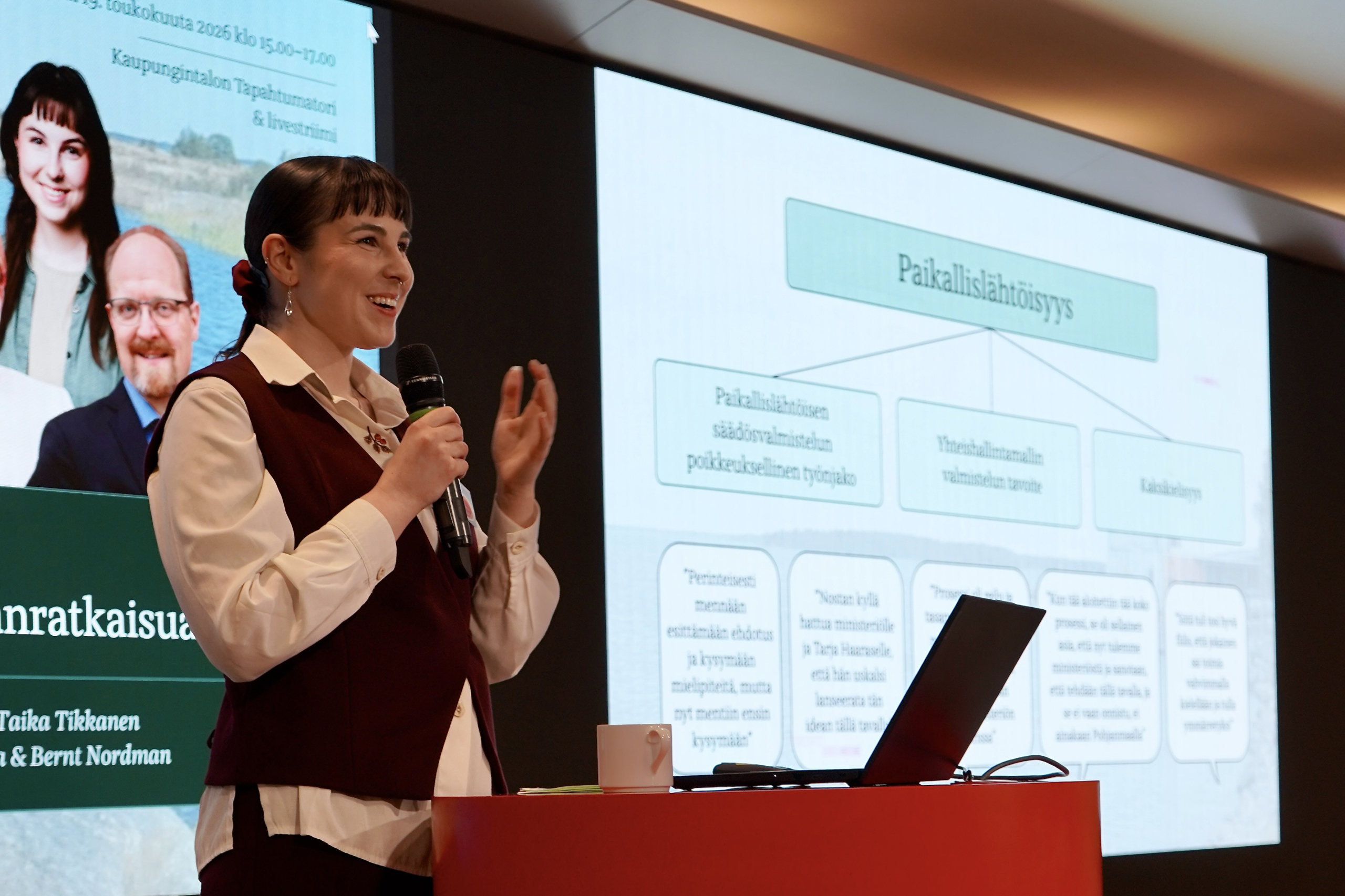
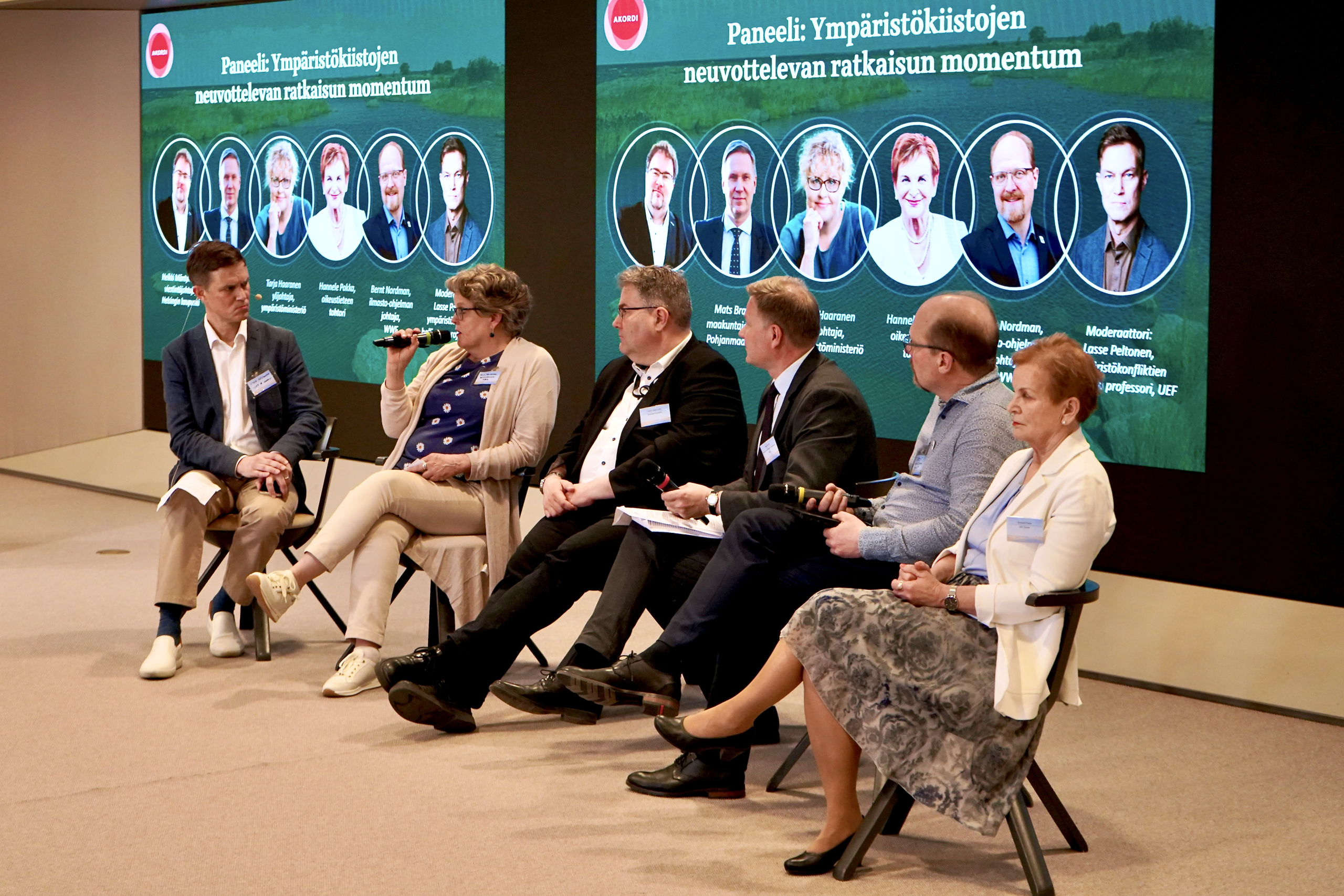
Akordi’s year began in North Karelia with discussions about the future of the Palokki power plant, when Juha-Pekka Turunen and Lasse Peltonen facilitated four discussion events in Tuusniemi, Tohmajärvi, Koli, and Joensuu. A total of 120 municipal decision-makers and mayors participated in the events from 17 municipalities, which jointly own Pohjois-Karjalan Sähkö Oy, the company that operates the power plant.

The government program’s entry concerning the liberalization of Palokki rapids would require the hydroelectric power plant to be redeemed by the state and dismantled. However, PKS’s dividends are an important source of income for the owner municipalities, so the state’s initiative has received a mixed reception in the municipalities.

Akordi planned and facilitated the discussion events on behalf of the Prime Minister’s Office. Risto Artjoki, State Secretary at the Prime Minister’s Office, and Jari-Pekka Punkari, Ministerial Adviser at the Government Ownership Steering Department, participated in all the events. The Regional Council of North Karelia was also closely involved in organizing the events.

Based on the feedback, the objectives of the events were well achieved. The roadmap drafted by the Prime Minister’s Office provided an outline of the possible progress of the restoration project. The open discussion was praised for allowing all views to be expressed and dealt with in a professional manner. However, the launch of the Palokki investigation still requires joint decisions by the owner municipalities.

After the events, a press conference was held in Joensuu on Tuesday, January 13. YLE and Karjalainen reported on the topic in Finnish.

YLE: Palokin koskien vapauttamisesta Heinävedellä voi tulla poliittinen päänvaiva useiden hallituskausien ajaksi

Karjalainen (paywall): Valtio ja kunnat keskustelivat Palokin koskista kaksi päivää – Tällaisin tuloksin

In Luppio, solutions were sought together with reindeer herding cooperatives, wind power companies, one mining project, and the business area director of energy funds

On September 3–4, 2025, we gathered with reindeer herding cooperatives, wind power companies, one mining project representative, and the business area director of energy funds to discuss the cumulative impact of wind power projects on reindeer herding and to brainstorm solutions for mitigating and compensating for the negative effects.

At the meeting in Luppio, the challenges were tackled in concrete terms at the level of two reindeer herding cooperatives. The participants were:

  • Lohijärvi and Palojärvi reindeer herding cooperatives
  • Wind power companies operating in the area covered by these cooperatives: ABO Energy Suomi, Etha, Myrsky Energia, Taaleri Energia, and VSB Uusiutuva Energia Suomi
  • Mining company Mawson Finland
  • Ålandsbanken’s Energy Funds Business Area Director

The proposed solutions and development needs that emerged included:

  • Restoring lost grazing areas
  • Contract templates for fair distribution of financial compensation
  • Construction and maintenance of various types of fences

The meeting was a continuation of the collaborative platform for reindeer husbandry and wind power that we have been building since 2019 with Reindeer Herders’ Association and Renewables Finland. In January, we met at the western reindeer herding district level, where we identified the need for unique meetings between two reindeer herding cooperatives and companies operating in their areas, which have now been realized. The first meeting of these took place in May in Ylitornio, and now the collaborative work has continued.

During the meeting, it was noted on several occasions how getting to know each other and learning about each other’s operating methods helps in dealing with common challenges. The earlier cooperation begins, the easier it is to find acceptable solutions.

A warm thank you to all participants for their active and constructive work!

The TAH and RELEX Foundations support Akordi’s work in five different living labs, which rolls out and scales procedures that have been tested and proven effective in anticipating and resolving conflicts related to the green transition. The interface between wind power and reindeer herding is one of these living labs.

A multi-perspective advisory group supports our work in anticipating and resolving green transition conflicts

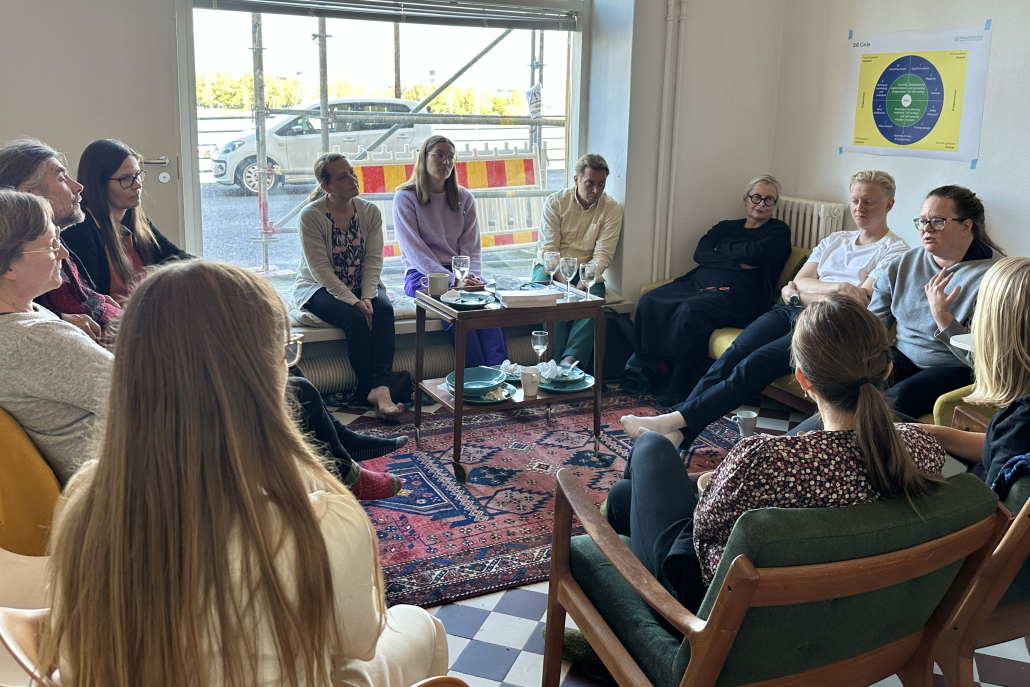
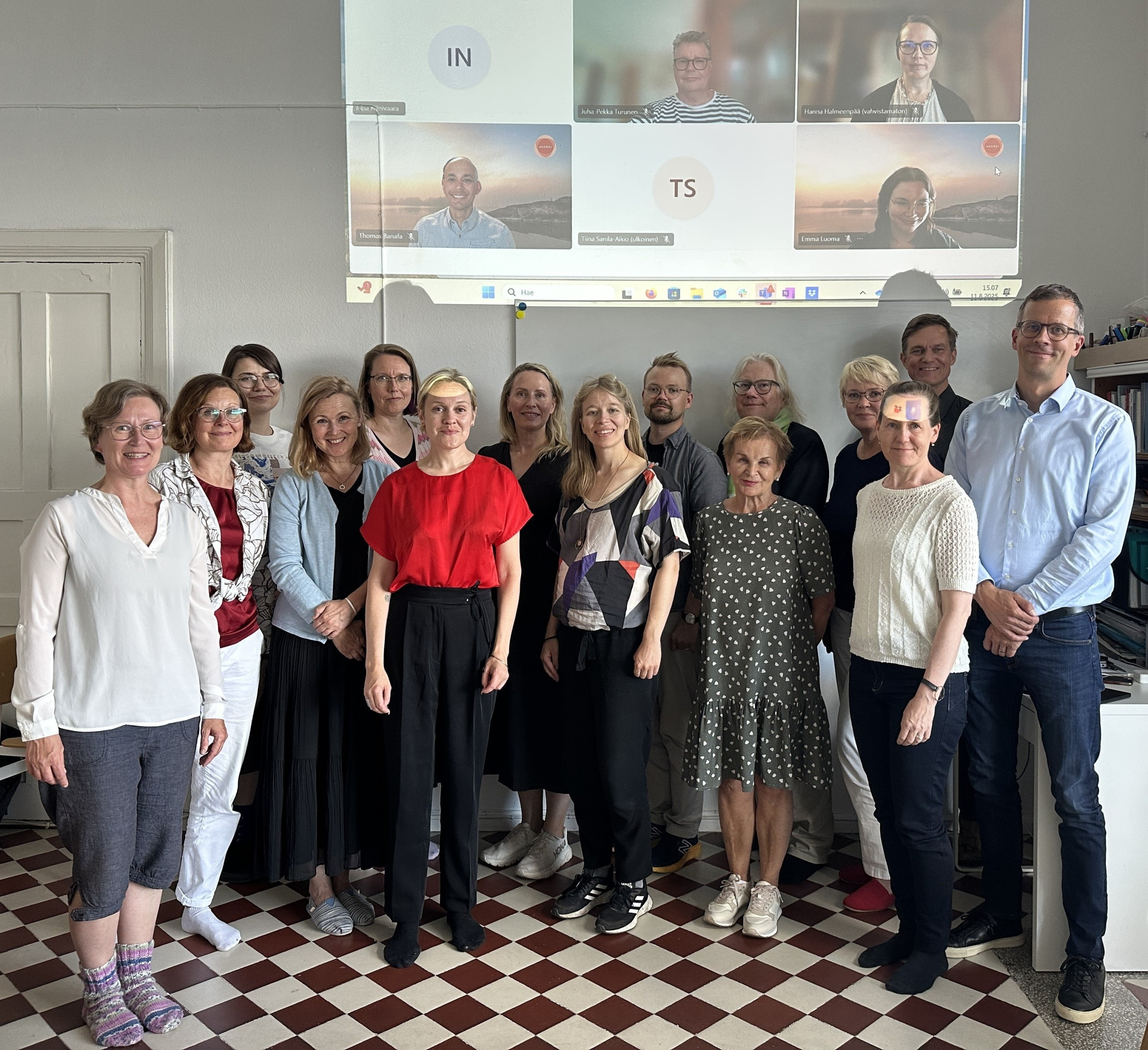
This week, we met with our new advisory group, whose members often sit on opposite sides of the negotiating table. At the meeting, experienced experts from different sectors discussed how we could best scale up and establish Akordi’s proven procedures at the national level.

With the support of the advisory group for the scaling up our work in anticipating and resolving conflicts in the green transition, we aim to

  • take into account the concrete challenges and opportunities in different regions and industries,
  • bring together the perspectives of different sectors, right-holders, and stakeholders so that the challenges of the acceptance of the green transition can be resolved fairly,
  • and scale up the practices based on joint problem-solving by the parties involved, and embed them in national practices.

It was great to see that the advisors recognized the importance of our work and were happy to support it. We are very grateful to have such a pluralistic and influential group of experts and their valuable input. We look forward to continuing our collaboration!

Advisors:

Angelique Irjala | City of Kristinestad
Arto Hietaniemi | University of Eastern Finland
Hanna Halmeenpää | The Finnish Association for Nature Conservation
Hannele Pokka
Heidi Paalatie | Renewables Finland
Jenni Hunnakko | MTK Central Union of Agricultural Producers and Forest Owners
Johanna Kentala-Lehtonen | The Prime Minister’s Office
Joonas Söderholm | City of Oulu
Laura Höijer | Ministry of the Environment of Finland
Mats Brandt | Regional Council of Ostrobothnia
Mila Segervall | City of Kristinestad
Minna Ojanperä | Confederation of Finnish Industries
Outi Kuittinen | RELEX Foundation
Sanna Hast | Reindeer Herders’ Association
Sanna Jylhä | Ministry of the Environment of Finland
Tapani Veistola | The Finnish Association for Nature Conservation
Taru Tujunen
Teppo Säkkinen | Chambers of Commerce
Tiina Sanila-Aikio
Touko Sipiläinen | Greenpeace Finland
Tuuli Orasmaa | Ministry of Agriculture and Forestry of Finland

The green transition and ways to build social acceptance for it were discussed at the Kristiinankaupunki Community Days

Akordi participated in Kristiinankaupunki Community Days on July 9–11 as a speaker, moderator, and active listener. Kristiinankaupunki is one of the project locations where we are working in our new foundation-funded project to help anticipate and resolve conflicts related to the green transition.


Keep cool and citta slow – Kristiinankaupunki style to the green transition

Kristiinankaupunki is striving to build green transition in a determined but considered manner, with a “Keep cool and citta slow” attitude.

“Cittaslow means cherishing the good life, building roads to the future from the history, and not rushing into things before they have been thought through,” explains Mayor Mila Segervall.

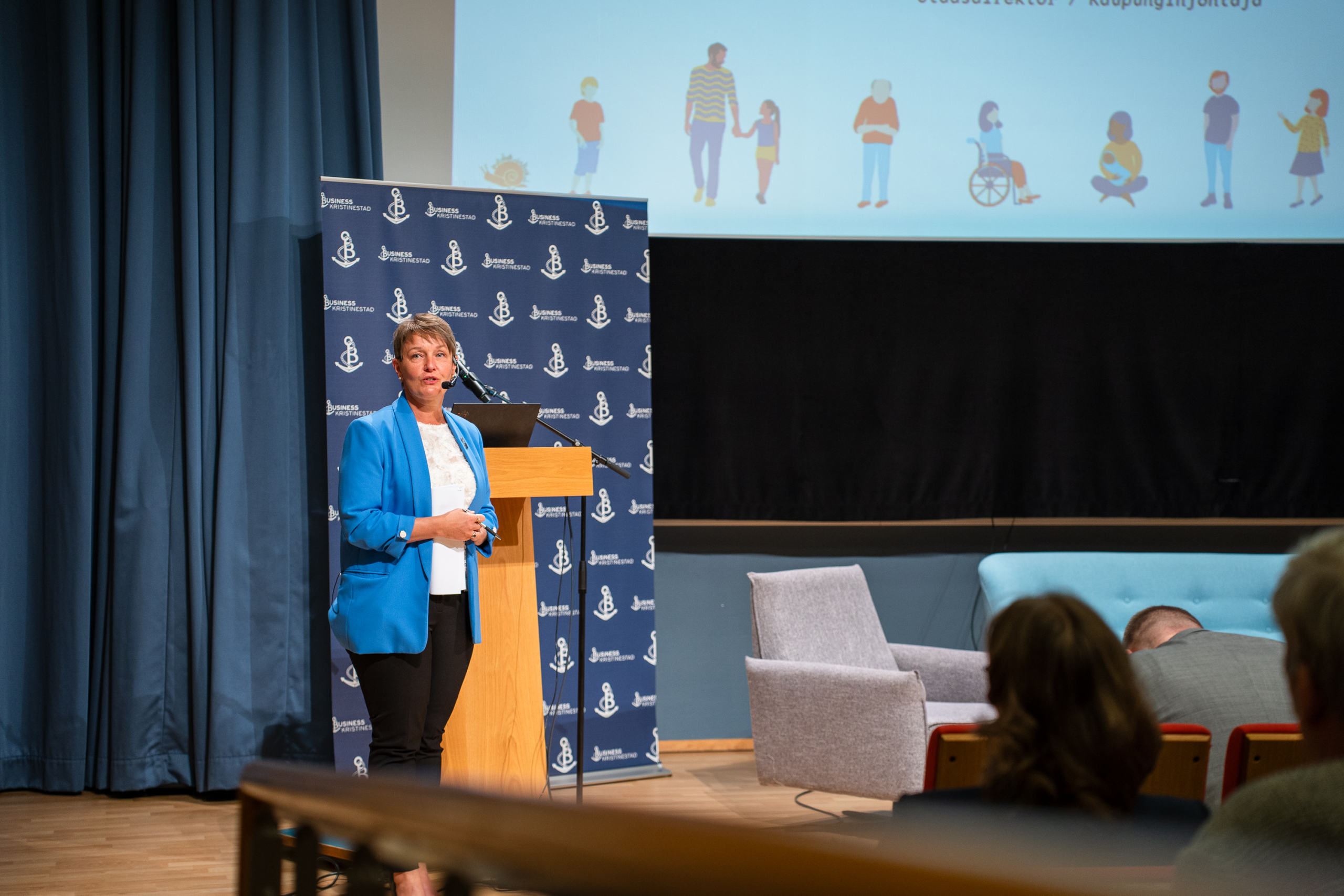
Segervall, Markku Kivistö from Business Finland, and representatives from four companies discussed green transition investments from different perspectives last Thursday. Topics included the expectations of city residents, the local impact on employment, the role of municipal decision-makers, and the responsibilities of early-stage communication. Cooperation between different actors, roles and methods of communication, and the city’s attractiveness factors were also discussed.

“Let’s move forward together. Slowly, when we have to, but decisively, because we have to,” Kivistö summed up at the end of the discussion.


More tools for municipalities to build social acceptance

On Friday, the role of ecological compensation as a tool for building acceptance was explored in greater depth. Kristiinankaupunki is one of the first municipalities in Finland to implement voluntary ecological compensation in accordance with the rules laid down in the Nature Conservation Act.

Akordi was joined in these discussions by Ramboll’s environmental consultant Inka Ojanen, City Council Chair Eva Lillmangs, Executive Director of the Ostrobothnia District of the Finnish Nature Conservation Association Marjo Lehtisalo, Regional Mayor Mats Brandt of the Regional Council of Ostrobothnia, and Markku Kivistö from Business Finland.

“For example, when trees are cut to make way for construction, this damage can be compensated for by restoring or protecting areas elsewhere. The aim is to ensure that biodiversity as a whole is not reduced as a result of human activity,” Ojanen explained.

Akordi’s Senior Mediator Juha-Pekka Turunen described what social acceptance of projects means beyond ecological compensation and how it can be built. He set a goal of finding solutions in Kristiinankaupunki that would be good from all perspectives: nature, the economy, and the local community. In the best-case scenario, it is not just a matter of avoiding, minimizing, and compensating for harmful impacts, but of creating entirely new solutions that are better than before.

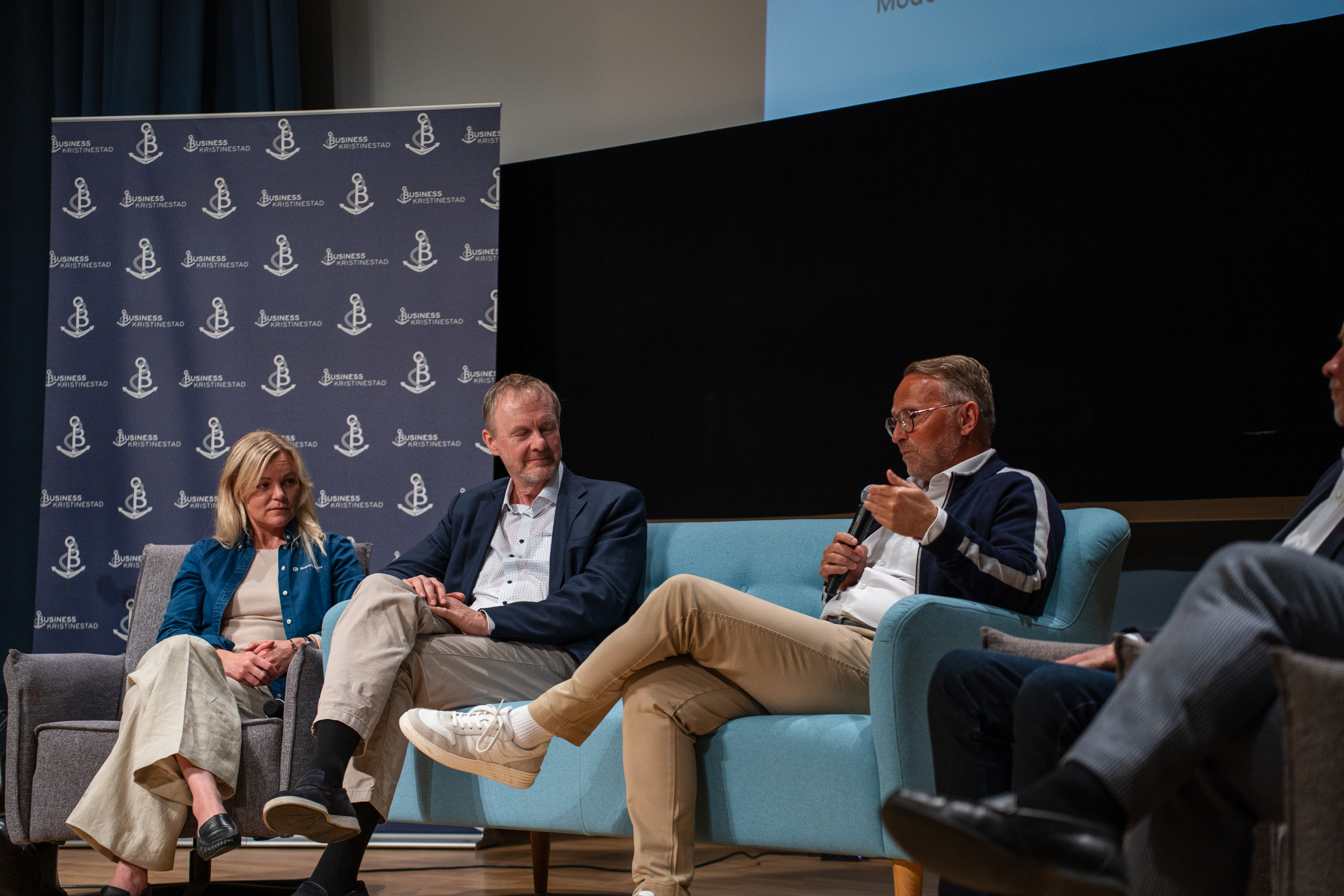
How can we get more benefits than disadvantages from green transition projects? This question was answered in a panel discussion moderated by Akordi’s Business Development Director Minna Näsman. The discussion highlighted, among other things, the enormous amount of new information, the need for cumulative impact assessment at the regional level, and the need to strike a balance between combating climate change, protecting biodiversity, and economic values. Efforts should be made to learn quickly and act strategically at every level: locally, regionally, nationally, and internationally.

“Practical measures are taken in municipalities, but they always have systemic effects on regions and the national economy. That is why we need to be able to shift our perspective between these different levels,” explained Regional Mayor Brandt.

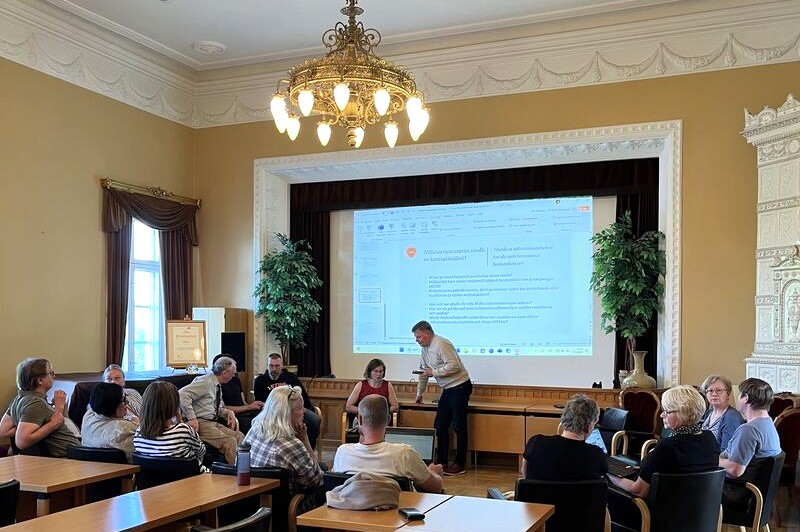
Kristiinankaupungin valtuutetut keskustelemassa Akordin asiantuntijoiden johdolla vihreän siirtymän näkymistä 17.6.2025 / Kuva: Mila Segervall 

Kristiinankaupunki is one of five project locations in a new foundation-funded project

The TAH Foundation and the RELEX Foundation have joined forces to fund Akordi’s work through a new project that offers help in finding fair and acceptable solutions at the local level.

The project, which began in June, brings in experts to help manage the green transition in five locations: Kristiinankaupunki, Oulu, the western reindeer herding area, Sodankylä, and the Kaustinen region. In addition, resources have been allocated for rising need from other areas as well. The aim is to roll out and scale up previously tested methods of conflict prevention and resolution that have been proven effective.

In Kristiinankaupunki, the work began with a discussion meeting for newly elected council members in June. With Akordi’s support, the city wants to strengthen its own ability to deal with the major changes ahead in a transparent, controlled, and fair manner.

In cooperation with Akordi, we want to increase understanding of different perspectives and create a shared vision of the future through dialogue at the right time and based on sufficient information. The aim is for the discussion to be proactive and to focus on what kind of projects are wanted in Kristiinankaupunki and on what terms,” says Mila Segervall, Mayor of Kristiinankaupunki.

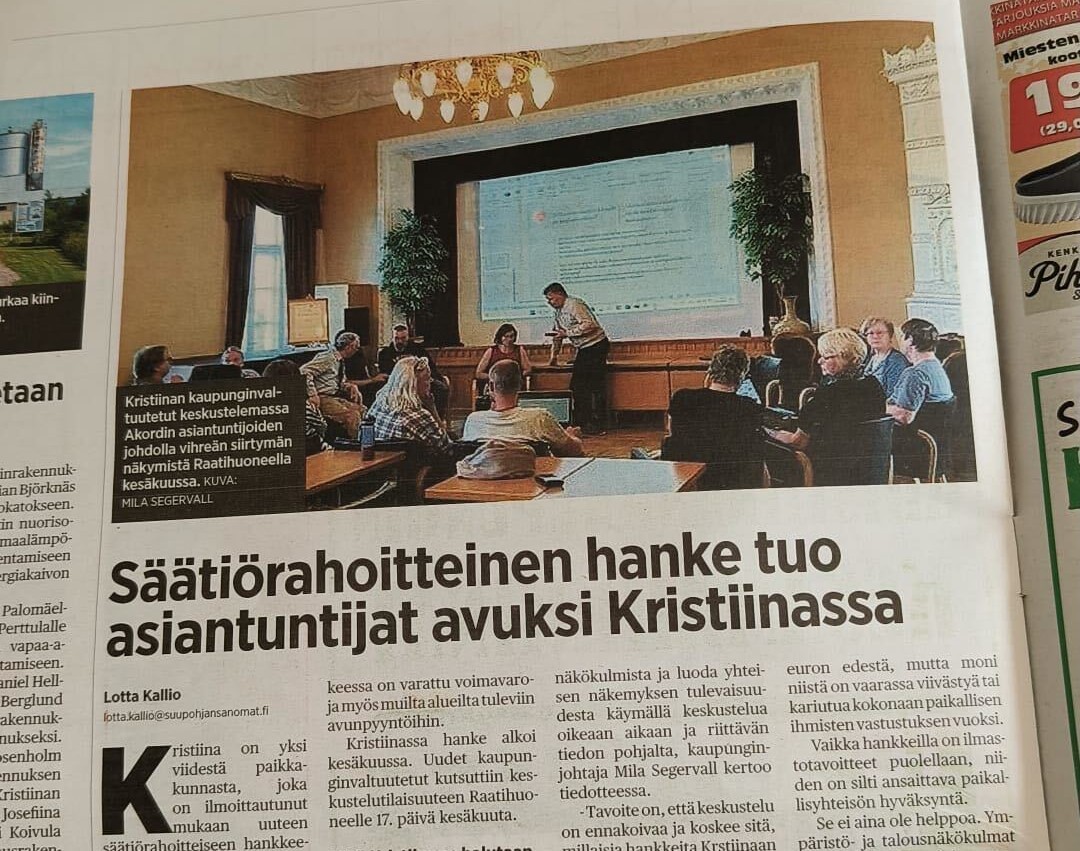
Suurpohjan Sanomat wrote earlier last week about Akordi’s work in Kristiinankaupunki: New foundation-funded project brings experts to Kristiina (in Finnish).

Read more about the project: Significant funding to Akordi for anticipating and resolving green transition conflicts on the local level


Panelists

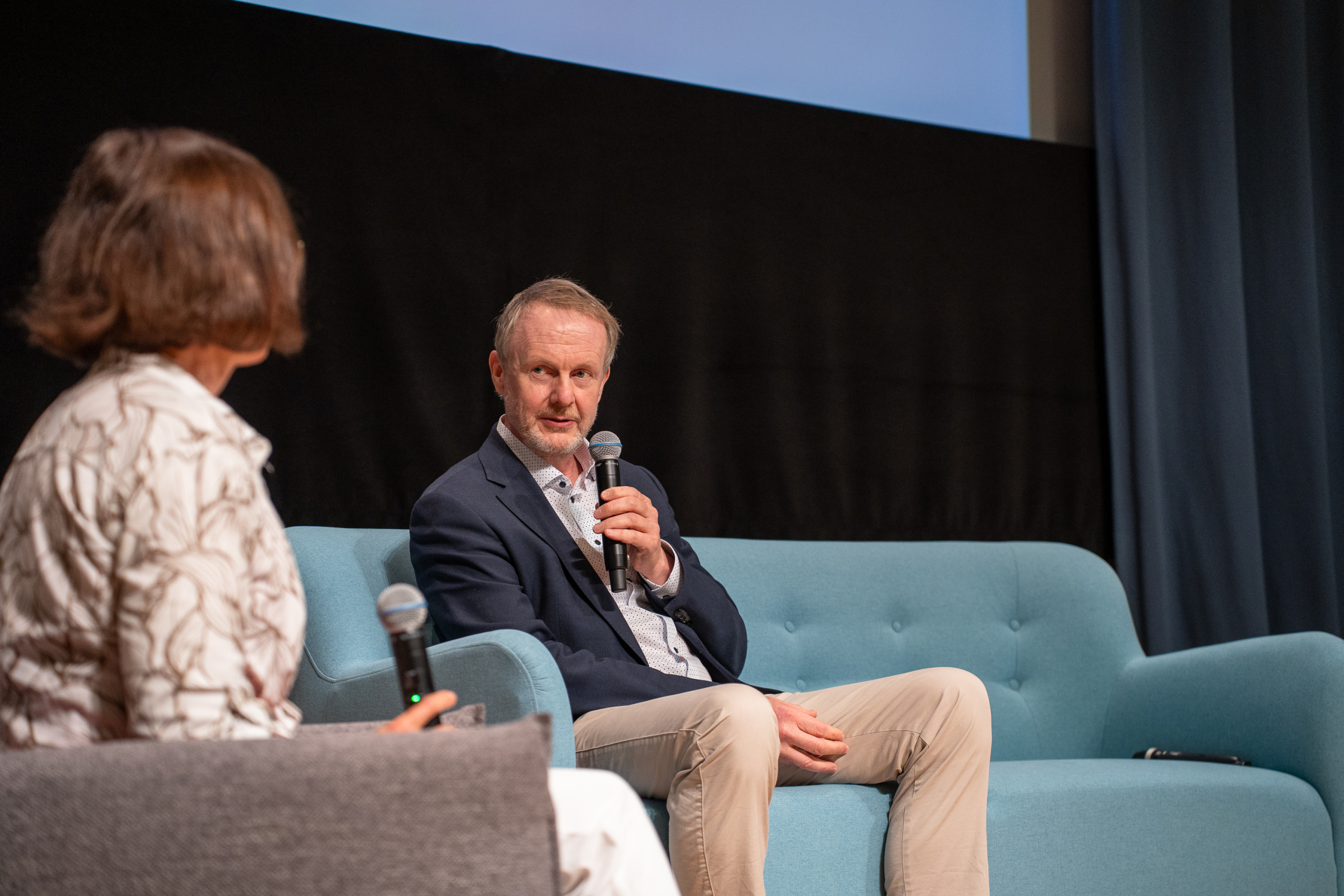
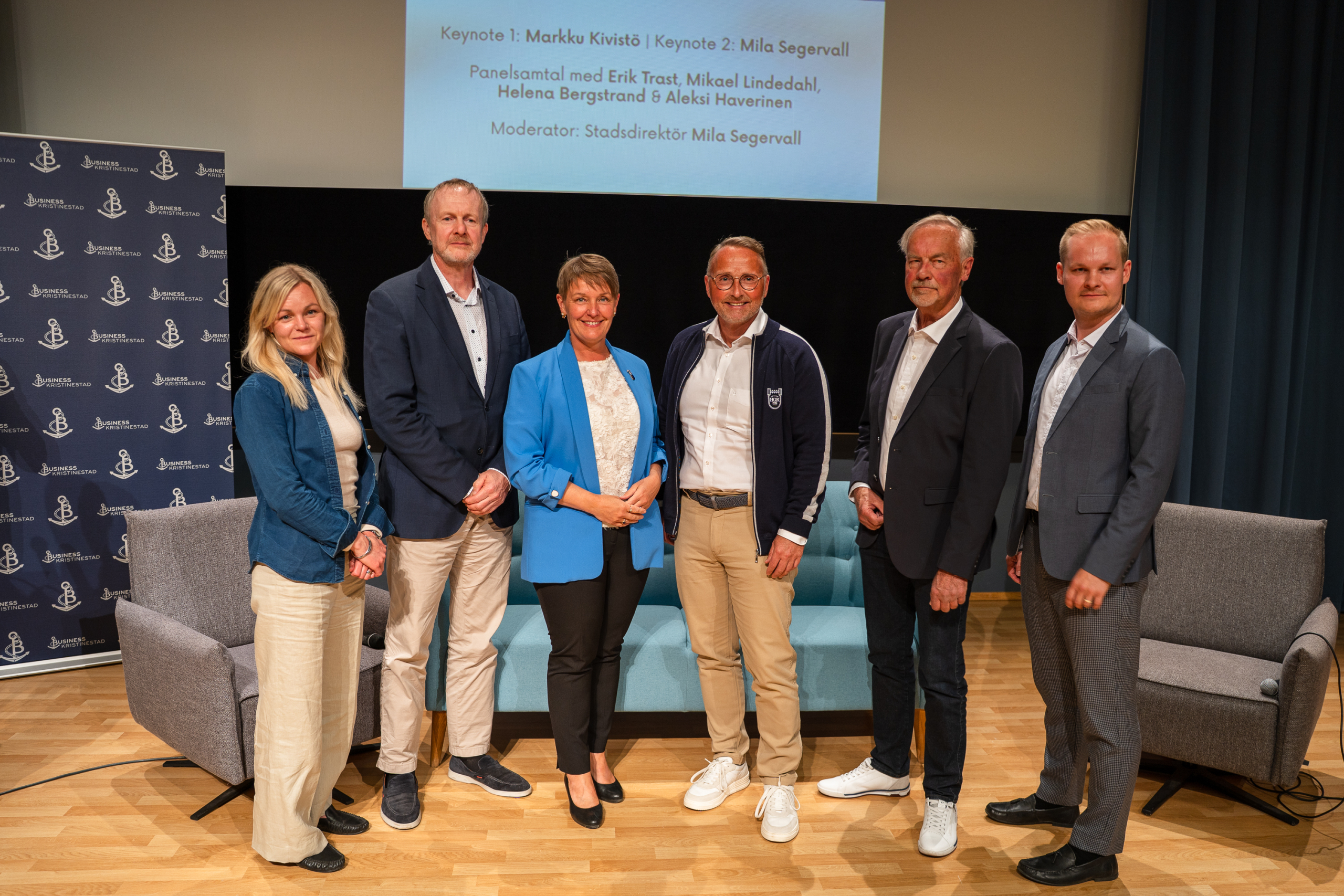
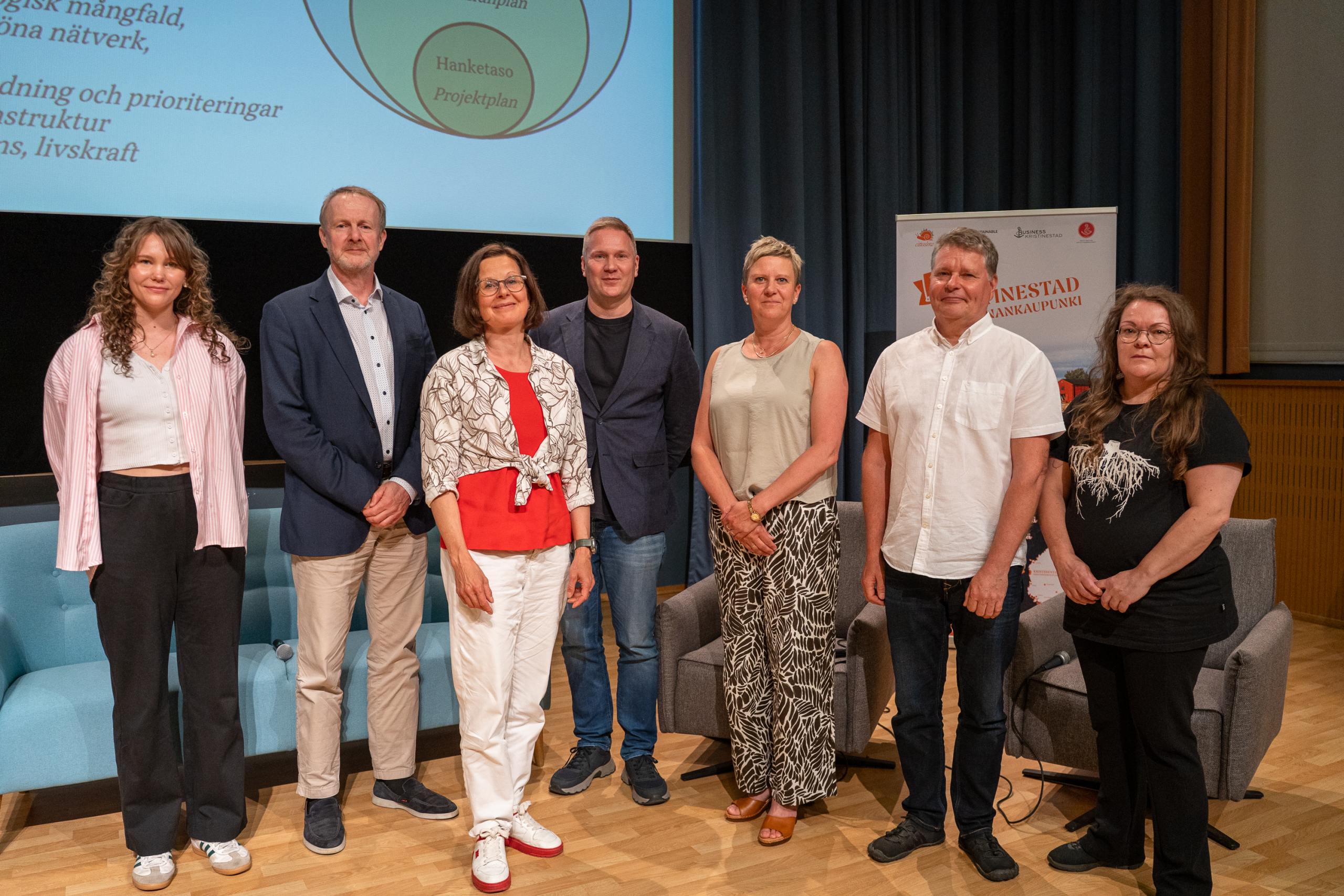
Photo 1: Kristiinankaupunki on the map – investments and faith in the future. From left: Helena Bergstrand / Global Connect, Markku Kivistö / Business Finland, Mila Segervall / Kristiinankaupunki, Erik Trast / Koppö Energi, Mikael Lindedahl / RL Trans, and Aleksi Haverinen / Plug Power.
Photo 2: Ecological compensation – What role will it play in Kristiinankaupunki in the future? From left: Inka Ojanen / Ramboll, Markku Kivistö / Business Finland, Minna Näsman / Akordi, Mats Brandt / Regional Council of Ostrobothnia, Eva Lillmangs / Kristiinankaupunki City Council, Juha-Pekka Turunen / Akordi, and Marjo Lehtisalo / Ostrobothnia District of the Finnish Nature Conservation Association.

Minna Näsman wrote about the themes of the discussions in more detail in her blog post from Thursday and from Friday (in Finnish).

Watch an excerpt from JP’s speech below (in Finnish):

Significant funding to Akordi for anticipating and resolving green transition conflicts on the local level

The TAH Foundation and the RELEX Foundation have joined forces to fund Akordi, a Helsinki based organization specialised in environmental collaboration and conflict resolution. The funding allows Akordi to get out on the ground, and help municipalities, enterprises and local communities in finding fair and acceptable solutions to the puzzles presented by new industrial green transition projects.

Green investments worth over €300 billion are in the pipeline in Finland, but many of these projects are at risk of being delayed or scrapped altogether due to local opposition. The arrival of large-scale projects can understandably feel uncontrollable to residents. Even though the projects have climate goals on their side, they still need to get the local community on board. Often, environmental and economic perspectives clash in discussions, dividing the community into camps for and against. The new project draws on lessons learned in the field of conflict resolution and offers new ways of managing the green transition on the local level.

It is clear that large industrial projects cause concern and uncertainty. Green transition projects often have negative environmental impacts, giving rise to so-called ‘green-on-green’ conflicts. In addition, projects change the livelihoods, population, and identity of the areas where they are located in significant ways. We need to quickly adopt better ways to anticipate and resolve these difficult equations together in fair and widely acceptable ways.” Akordi’s CEO Jonna Kangasoja explains.

Akordi proposed a project targeted to these challenges to the TAH Foundation and the RELEX Foundation. The foundations co-fund the project with a total of €200,000.

“The green transition is not just about technology, or the economy, or the climate. It is also about nature, people, and justice. We need practical examples that show how conflicts related to the green transition can be resolved at the local level and how solutions that are good for local communities, businesses, nature, and the climate can be found. That is why we want to fund Akordi’s work,” says RELEX Foundation CEO Outi Kuittinen.

The work began in June. Over the course of a year these issues will be tackled in five localities, which are Kristiinankaupunki, Oulu, the western reindeer herding area, Sodankylä, and the Kaustinen region. There are some resources allocated to be able to attend to requests for help from other areas.

In Kristiinankaupunki, the work began with a discussion meeting for newly elected council members in June. With Akordi’s support, the city wants to strengthen its own ability to deal with the major changes ahead in a transparent, controlled, and fair manner.

One of the biggest issues in Kristiinankaupunki is the planned green transition projects, which will affect the vitality and future of the municipality. In cooperation with Akordi, we want to increase understanding of different perspectives and create a shared vision of the future through dialogue at the right time and based on sufficient information. The aim is for the discussion to be proactive and to focus on what kind of projects are wanted in Kristiinankaupunki and on what terms,” says Mila Segervall, Mayor of Kristiinankaupunki.

Mats Brandt, Regional Mayor of Ostrobothnia, will be discussing the topic on July 11 at the Kristiinankaupunki Community Day, alongside Marjo Lehtisalo, Executive Director of the Ostrobothnia District of the Finnish Association for Nature Conservation. Brandt hopes that the Kristiinankaupunki pilot will produce an model that can be rolled out across the entire region.

The main objective of the project is, in fact, to roll out and scale procedures that have already been tested and validated in Akordi’s work. Akordi compiled these in a Playbook for the Local Acceptability of the Green Transition, published with the support of the TAH Foundation in November 2024. The Playbook provides concrete advice on how to earn local acceptance and build trust between the companies, municipalities, and residents.

“Akordi’s science-based and skilled approach draws from international best practices. It has proven to be very effective. Crafting collaborative and negotiated solutions on the local level is essential to be able to achieve a future within planetary boundaries,” says Henna Hakkarainen, Executive Director of the TAH Foundation.

The goal is to roll out and scale up previously tested methods

The background for the project to scale up proven procedures is a two-year project (June 2023–June 2025) funded by the TAH Foundation, entitled Anticipating and resolving conflicts in the green transition, during which Akordi, among other things,

  • collected international examples (from United States and the Netherlands)
  • organized open events, visits by international experts to Finland, and a Finnish excursion to the Netherlands
  • piloted mediated collaboration and conflict resolution processes in several different contexts. The pilots resulted in both concrete local solutions and replicable operating models.

The pilots resulted in concrete solutions to these situations as well as replicable procedures, which will be scaled up in the follow-up project.

The new project, funded by TAH and RELEX Foundations, will be rolled out in the following municipalities:

  • Kristiinankaupunki – proactive consideration and widely accepted solutions at municipal level
  • The western reindeer herding area, where concrete steps have been taken to promote dialogue and problem-solving between renewable energy project developers, reindeer herding cooperatives, and a mining company. New methods for assessing cumulative impacts and compensating for harmful impacts are being invented and developed in collaboration by the Lohijärvi and Palojärvi reindeer herding cooperatives, Taaleri Energia, Myrsky Energia, Energiequelle, VSB Energy, and the mining company Mawson.
  • Sodankylä (in the form of supporting and expanding the activities of Akordi’s previous Collaborative Water Monitoring Platform of Mining)
  • Kaustinen region (in the situation assessment phase – themes include hydrogen and renewables)
  • City of Oulu (in the situation assessment phase – themes include hydrogen and renewables)

The project has also allocated resources to respond to any urgent needs that arise across Finland during the project. We will respond to requests for assistance and take action to clarify the situation. Together with the parties involved, we can develop a suitable plan of action for the situation. The aim is to provide rapid, proactive assistance to municipalities, counties, companies and NGOs before disputes escalate.

New challenges require new skills

“The sustainability transition is a huge societal change that requires a lot of new skills and expertise in companies, municipalities, and throughout society as a whole. We want to raise awareness of procedures that have been found to work in practice in the field, such as negotiation and alternative dispute resolution, and help them become part of everyday life in the green transition. With the support of the foundations, we were able to get started quickly,” says Jonna Kangasoja.

Local Acceptance of the Green Transition Playbook has been received with great interest by companies. Based on the playbook, free training courses have been organised across Finland. The participants come from nearly 80 different organisations, including more than 30 energy companies and network operators. The participants also include employees from municipalities, ministries and associations. The courses will continue in the autumn.

The project is also developing expertise in Swedish. The development work supports Nordic cooperation and the sharing of best practices across national borders.


Akordi publications produced during the last TAH Foundation project:


Read more and follow the progress of the project: Scaling up the work in anticipating and resolving conflicts in the green transition


Further information:

Jonna Kangasoja, CEO, Akordi Oy

jonna@akordi.fi, +358 50 441 2863